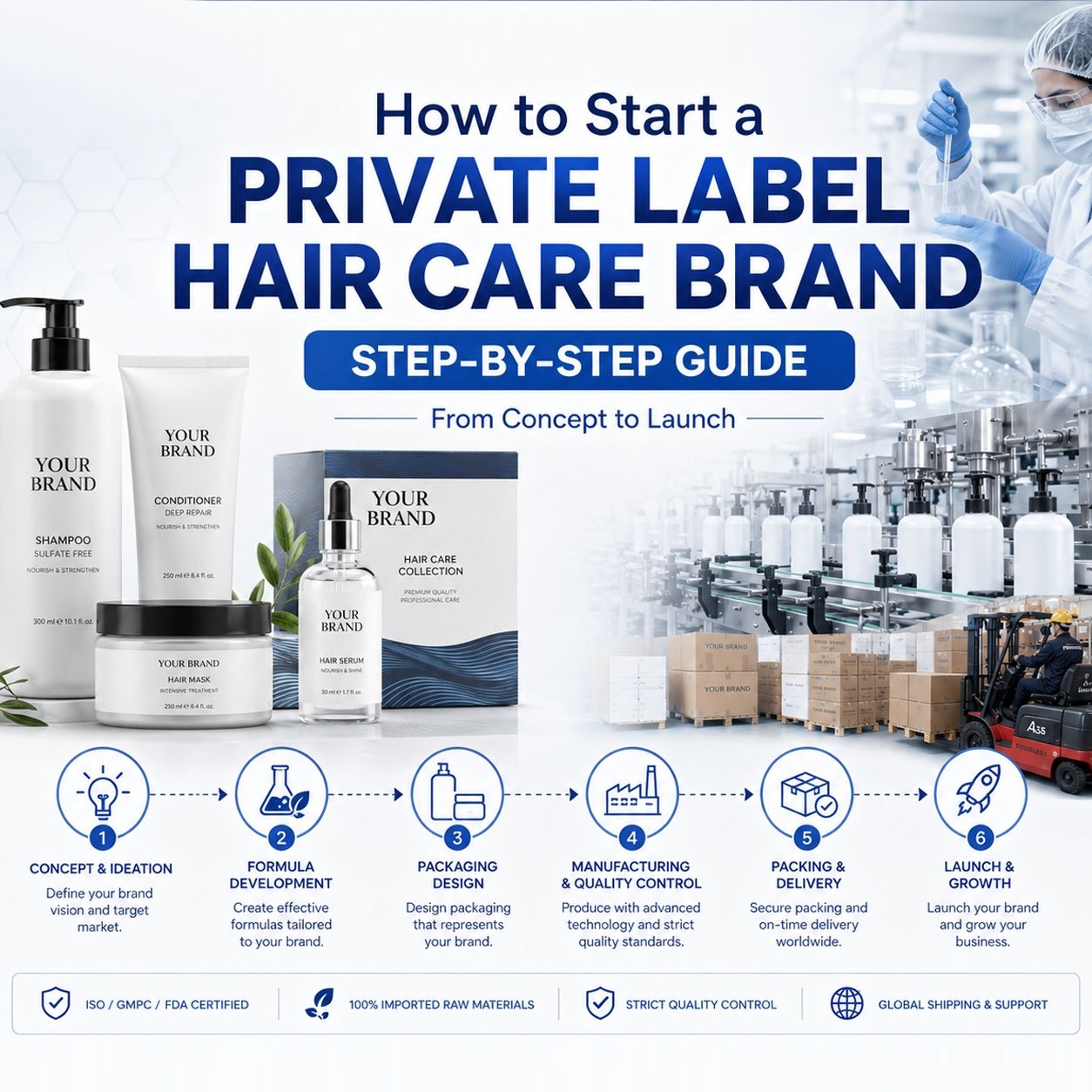
Learning how to start a private label hair care brand can seem complicated at first. You need to choose the right customers, products, formulas, packaging, and manufacturing partner. However, you do not need to own a factory to bring your products to market.
With the right private label hair care business model, you can work with an experienced manufacturer to develop and produce products under your own brand. Whether you want to launch shampoo, hair masks, oils, or styling products, following a clear process can help you avoid unnecessary mistakes.
This guide explains how to start a hair care brand in 10 practical steps, from identifying your market to preparing for launch.
1. Define Your Target Market
The first step in how to start a private label hair care brand is understanding who you want to sell to. A successful brand should focus on a specific customer group instead of trying to appeal to everyone.
Your target market may include people with dry or damaged hair, curly or textured hair, salon customers, or consumers looking for premium or ingredient-focused products.
Before you create your own hair care brand, ask:
- What hair problem will my products address?
- Who is most likely to buy them?
- What price range does this customer expect?
- Where will I sell the products?
- What will make my brand different?
Your answers will guide your formula, packaging, pricing, and marketing. They will also help your hair care brand manufacturing partner understand what you want to produce.
Once you know your customer, you can decide which products belong in your first collection.
2. Choose Your Hair Care Product Categories
You do not need to launch a large collection immediately. When you start a hair care brand, a focused range can be easier to develop, market, and manage.
Common private label hair products include:
- Shampoo
- Conditioner
- Hair masks
- Hair oils and serums
- Leave-in treatments
- Styling products
- Keratin treatments
A simple three-product system, such as shampoo, a hair mask, and a finishing oil, can give customers a complete routine.
LocRoyal offers private label and OEM/ODM manufacturing for categories including shampoo, hair masks, hair oils, styling products, and keratin treatments.
Choose products that work together and solve related customer problems. This gives your custom hair care brand a clearer identity and makes marketing easier.
3. Decide Between Private Label, OEM, and ODM
One important decision is choosing the right manufacturing model for your private label hair care business.
Private Label
Private label usually involves selecting an existing product and selling it under your own brand. You may customize the branding, label, and certain packaging elements. This can be a practical option for businesses that want to launch private label hair products efficiently.
OEM
OEM manufacturing generally allows a customer to provide more detailed product requirements. Depending on the project, this may include formula, fragrance, packaging, or other specifications.
ODM
ODM provides additional development support. A manufacturer can help turn your concept into a finished product solution.
The right option depends on how much customization you want, your budget, and your expected order quantity.
LocRoyal states that it offers private label, OEM, and ODM services for brands seeking customized hair care products. You can review its manufacturing services through its official website.
4. Develop or Select Your Formula
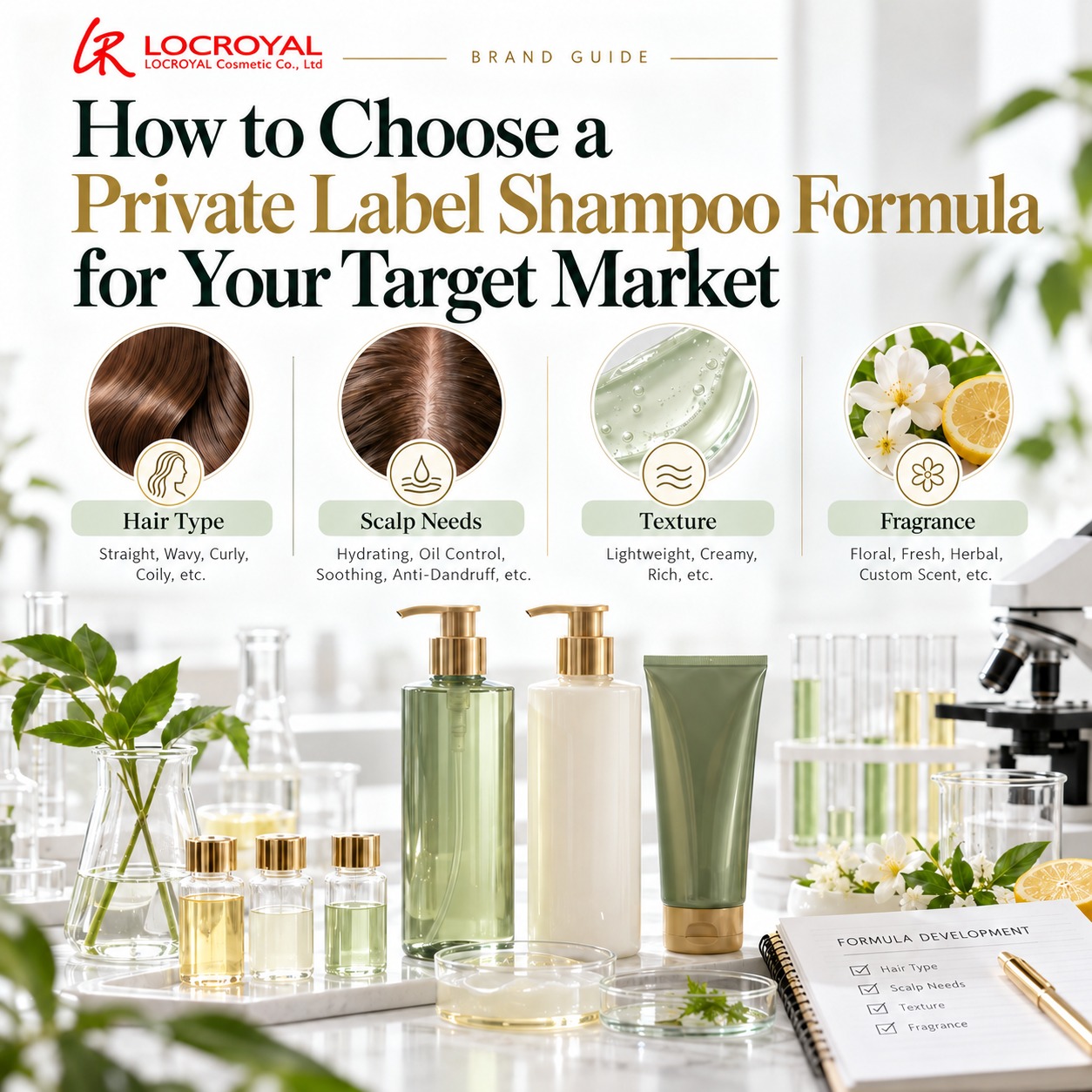
Your formula is one of the most important parts of your product. When building a custom hair care brand, give your manufacturer a clear product brief.
Include details such as:
- Target hair type
- Main product benefits
- Preferred texture
- Fragrance direction
- Ingredient preferences
- Intended market
- Target price range
For example, instead of asking for a general hair mask, you could request a rich conditioning treatment designed for dry hair with a smooth texture and a specific fragrance direction.
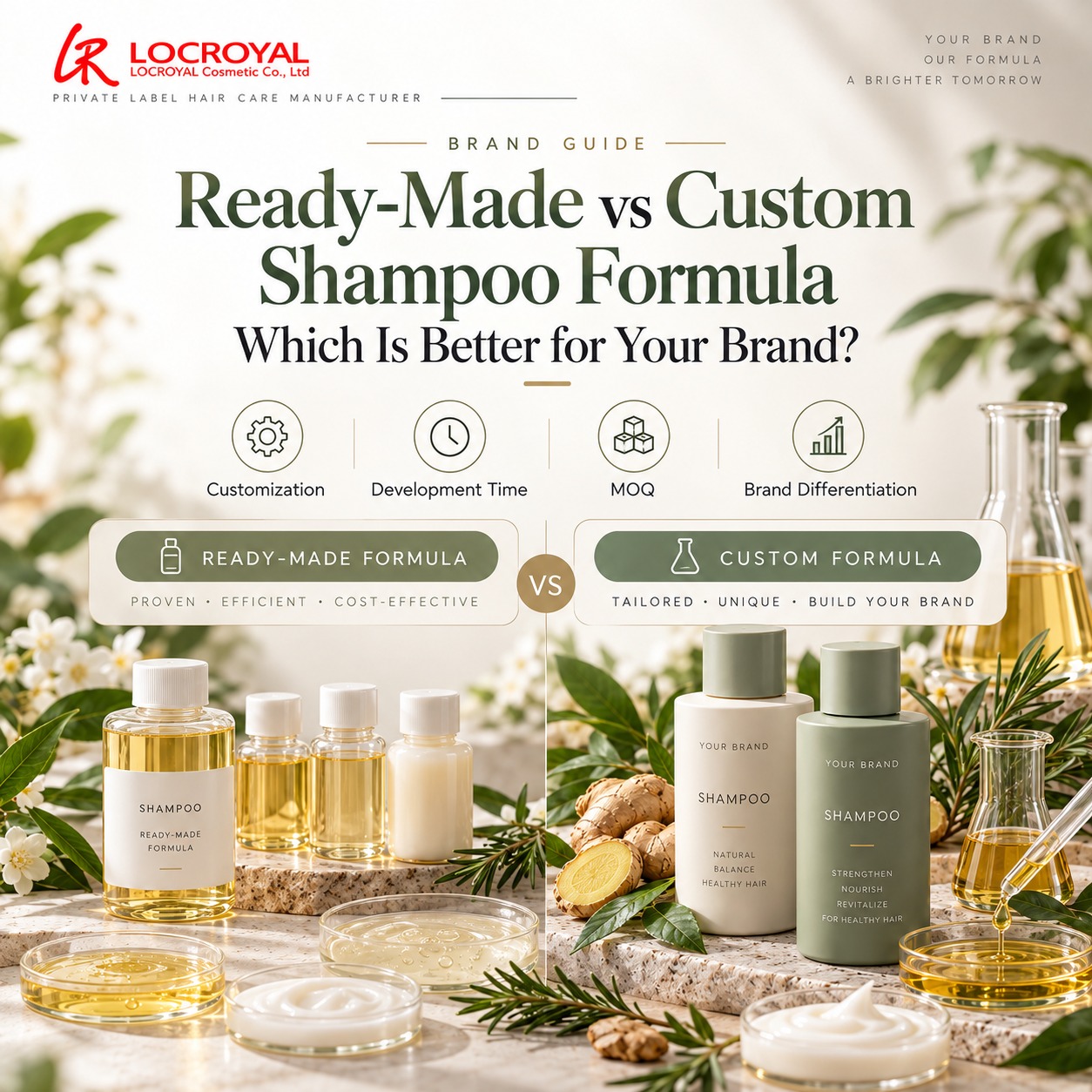
An existing formula may help you launch faster. A custom formula may provide more opportunities to differentiate your brand, but it can also involve additional development work.
This is why clear communication is essential in hair care brand manufacturing.
According to LocRoyal, its services include custom formulation and R&D support for private label and OEM/ODM projects.
5. Choose Packaging
Packaging affects both product function and brand identity. Your package should protect the formula, be easy to use, and match your target market.
Common packaging for private label hair products includes bottles, pumps, jars, tubes, and spray containers.
When you create your own hair care brand, consider questions such as:
- Does the package work with the product texture?
- Is it convenient for customers?
- Does it fit your price position?
- Can it support your required order quantity?
Your packaging should also create a consistent brand image. Use similar colors, fonts, and design elements across your collection to make your custom hair care brand easier to recognize.
LocRoyal states that it provides packaging and label-related support as part of its product development services.
6. Request and Test Samples
Before placing a large order, request samples. This is an important stage when learning how to start a private label hair care brand because it allows you to inspect the actual product.
Review the:
- Appearance
- Fragrance
- Texture
- Ease of use
- Packaging function
- Overall customer experience
If something does not meet your expectations, provide clear feedback before moving to the next stage.
A careful sample review can help your private label hair care business avoid costly changes during mass production.
LocRoyal describes its sample process and advises customers to discuss the specific sample arrangement for their project directly with the company.
Once you understand your product concept and manufacturing model, the next step is to identify suppliers that match your requirements.
Do not choose a manufacturer based on price alone. Compare hair care expertise, custom formulation capabilities, MOQ, production capacity, quality systems and support for future growth.
If you are still evaluating suppliers, our comparison of top private label hair care manufacturers can help you shortlist manufacturers based on different brand needs and production requirements.
7. Confirm MOQ and Pricing
MOQ, or minimum order quantity, is a key consideration when ordering private label hair products.
The MOQ can depend on factors such as the product type, formula customization, packaging, and production requirements.
Before confirming an order, ask your hair care brand manufacturing partner for clear information about:
- MOQ
- Product pricing
- Packaging costs
- Development or sampling fees
- Production lead time
- Shipping arrangements
Do not focus only on the lowest unit price. Also consider the manufacturer’s production capabilities, communication, quality procedures, and ability to support future growth.
LocRoyal’s official website states that MOQ requirements can vary according to project specifications, including packaging and customization.
8. Approve Pre-Production Samples
Before mass production begins, carefully review the final approved version of your product.
Check the formula, fragrance, texture, packaging, labels, logo placement, and other agreed details.
This stage helps ensure that the finished products match your expectations.
When you start a hair care brand, keep written records of the approved specifications. This creates a clear reference for the production process.
For a custom hair care brand, small details can make a major difference. A packaging error or incorrect label can become much more expensive to correct after large-scale production has started.
Once everything is approved, your project can move into manufacturing.
9. Begin Mass Production
Mass production turns your approved concept into finished inventory.
During this stage, stay in contact with your private label hair care business manufacturer and confirm the production schedule, quality checks, packaging status, and shipping arrangements.
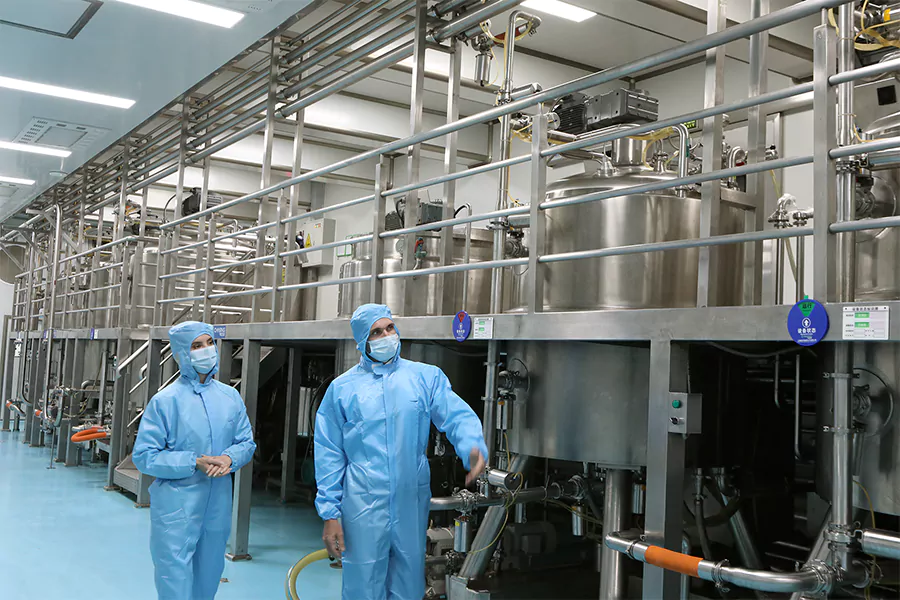
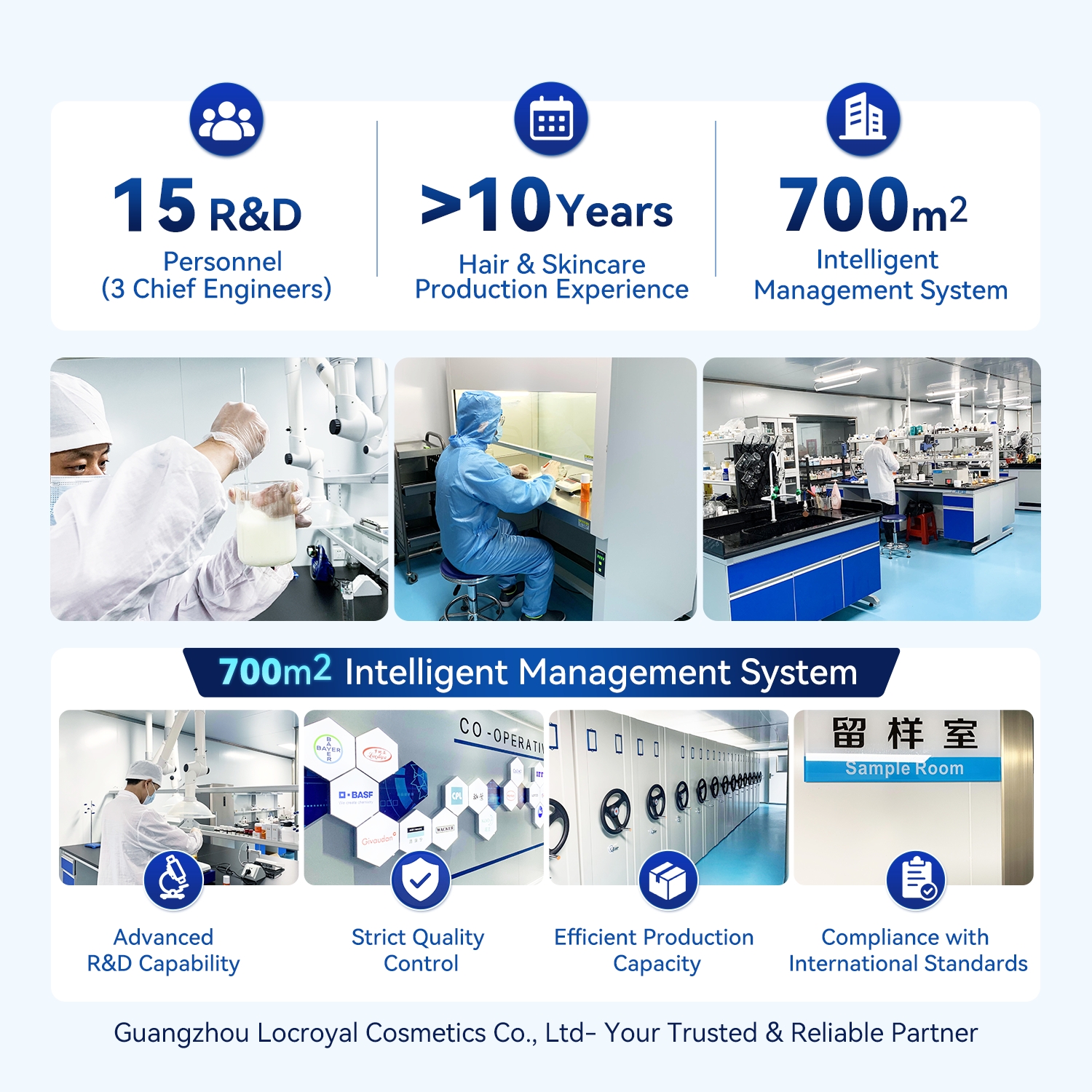
LocRoyal states that it operates a 50,000㎡ manufacturing facility and provides hair care manufacturing services covering product development, production, and quality management.
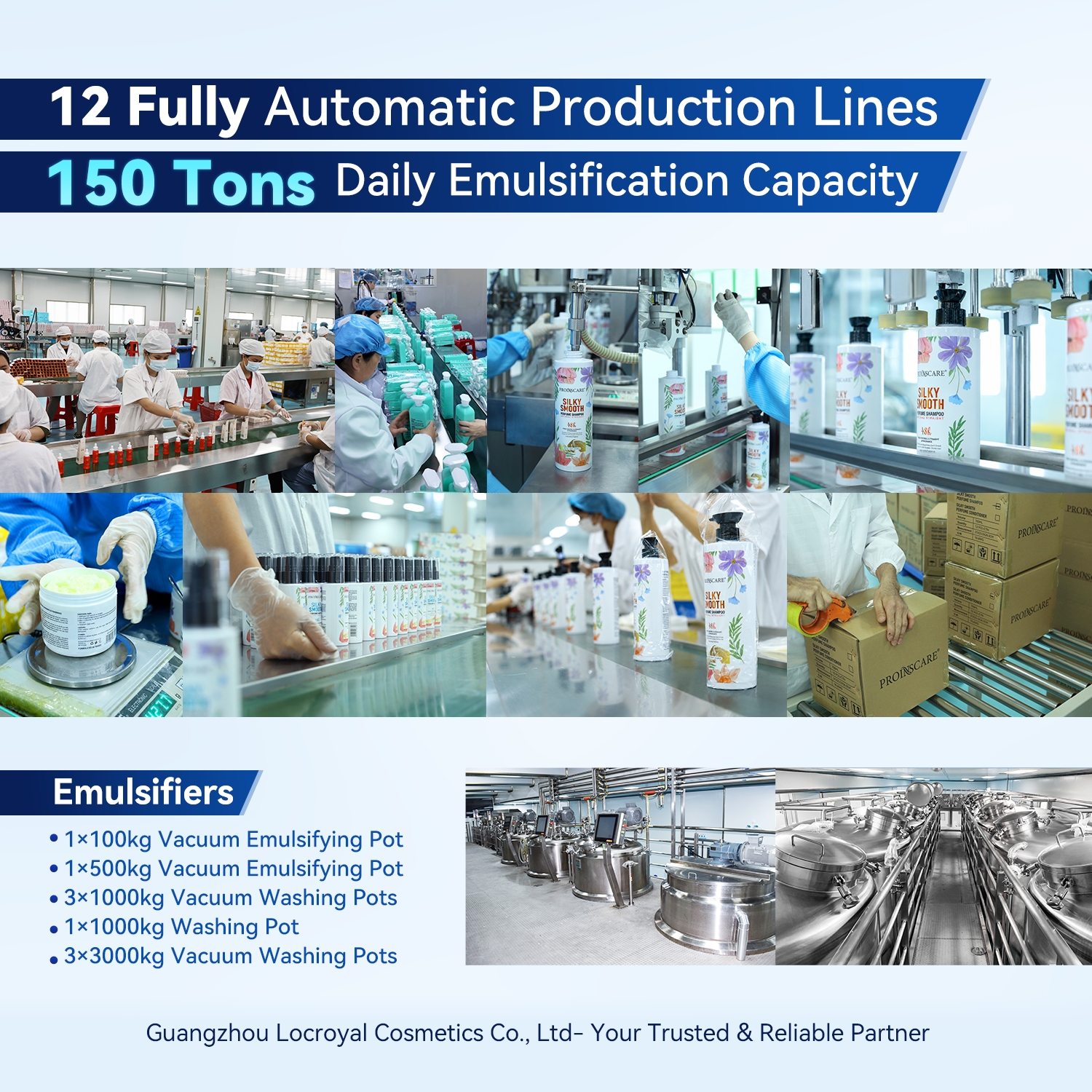
For long-term hair care brand manufacturing, consider whether your manufacturer can support new products and increased production as your business grows.
The wider business information provided for this article describes Foshan BonnieCo Biotechnology Co., Ltd. (BonnieCo Group) as a smart beauty manufacturing group with three core business divisions:
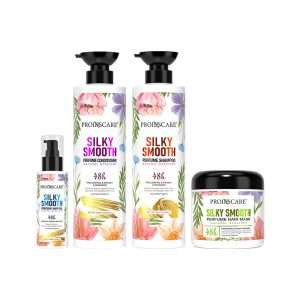
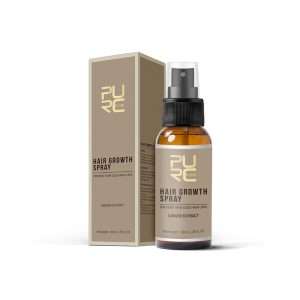
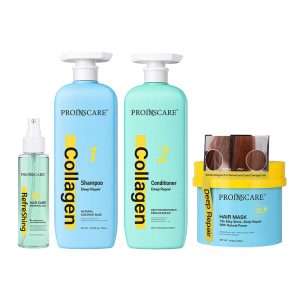
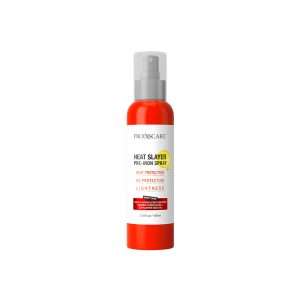
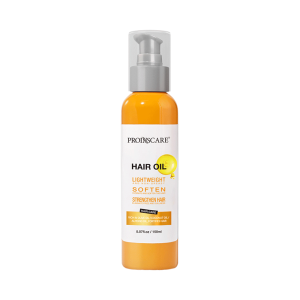
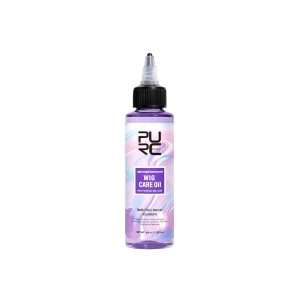
- Guangzhou LocRoyal Cosmetics Co., Ltd.: Hair care OEM and self-owned brands, including PROINSCARE and PURC.
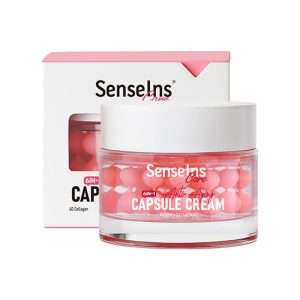
- Guangzhou BonnieCo Cosmetics Co., Ltd.: Skin care and color cosmetics OEM and self-owned brands, including SenseInsCare and Jellyprim.
- A 50,000㎡ self-owned production base in Foshan.
This structure can support businesses looking to develop products across hair care and other beauty categories.
10. Prepare for Market Launch
Manufacturing is only one part of the process. Once your private label hair products are ready, you need a clear launch strategy.
Prepare:
- Product descriptions
- Product photography
- Brand messaging
- Website or online store content
- Social media materials
- Customer service processes
- Inventory and shipping plans
Your marketing should connect with the target market you identified in the first step.
For example, if your custom hair care brand focuses on damaged hair, your product descriptions, images, and marketing messages should clearly communicate that focus.
The key to learning how to start a private label hair care brand is connecting every stage. Your target market should guide your product choices, your products should guide formula development, and your brand positioning should influence packaging and marketing.
Conclusion
To start a hair care brand, you do not need to manage every part of the manufacturing process yourself. A reliable manufacturing partner can support product development and production while you focus on building your brand and reaching customers.
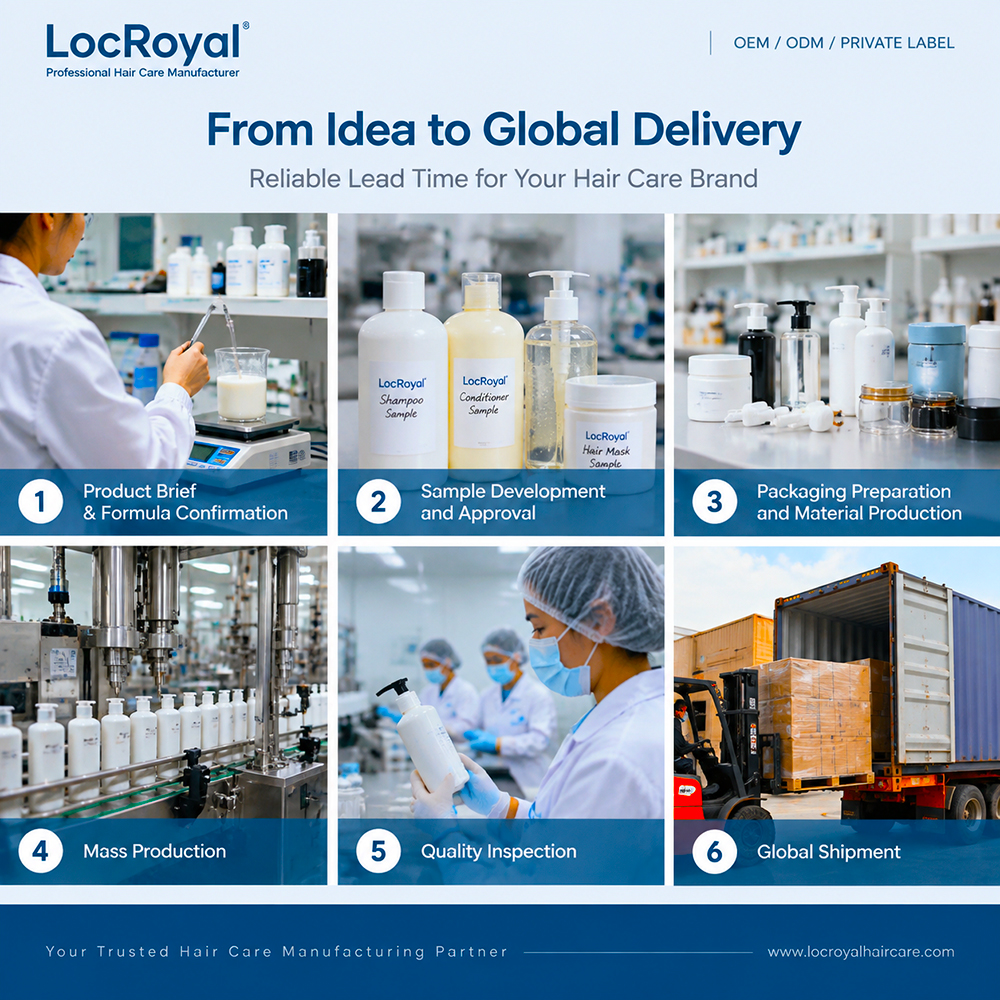
The process is straightforward when divided into clear stages: define your target market, choose products, select a private label, OEM, or ODM model, develop your formula, choose packaging, test samples, confirm MOQ and pricing, approve pre-production samples, begin manufacturing, and prepare for launch.
LocRoyal offers private label and OEM/ODM services for businesses developing private label hair products and a custom hair care brand. Its services cover areas including formulation, packaging, manufacturing, and related product development support. Learn more through the LocRoyal official website.
FAQs
1. How do I start a private label hair care brand?
Define your target market, choose your products, select a manufacturing model, review samples, confirm pricing and MOQ, approve production, and prepare your launch.
2. What products can I include when I start a hair care brand?
Common options include shampoo, conditioner, hair masks, oils, serums, styling products, and treatments.
3. What are private label hair products?
Private label hair products are products manufactured for a business and sold under that business’s own brand name.
4. Can I create my own hair care brand with a custom formula?
Yes. A manufacturer offering OEM or ODM services may help develop a custom hair care brand based on your product requirements.
5. What is the difference between private label and OEM?
Private label generally uses an existing product solution under your branding, while OEM can involve manufacturing according to more specific customer requirements.
6. What is MOQ in a private label hair care business?
MOQ means minimum order quantity. It varies depending on factors such as the product, formula, packaging, and customization requirements.
7. Does LocRoyal provide hair care brand manufacturing services?
According to its official website, LocRoyal provides private label, OEM, and ODM services for hair care product development and manufacturing.
8. Can I request samples before ordering private label hair products?
Yes. Sample arrangements are commonly part of the product development process. LocRoyal also publishes information about sample requests through its FAQ.
9. Can LocRoyal help with packaging for a custom hair care brand?
LocRoyal states that it provides support for packaging and product presentation as part of its private label and OEM/ODM services.
10. Where can I learn more about starting a private label hair care business with LocRoyal?
You can discuss private label hair products, custom formulas, packaging, MOQ, and hair care brand manufacturing requirements through the LocRoyal website.