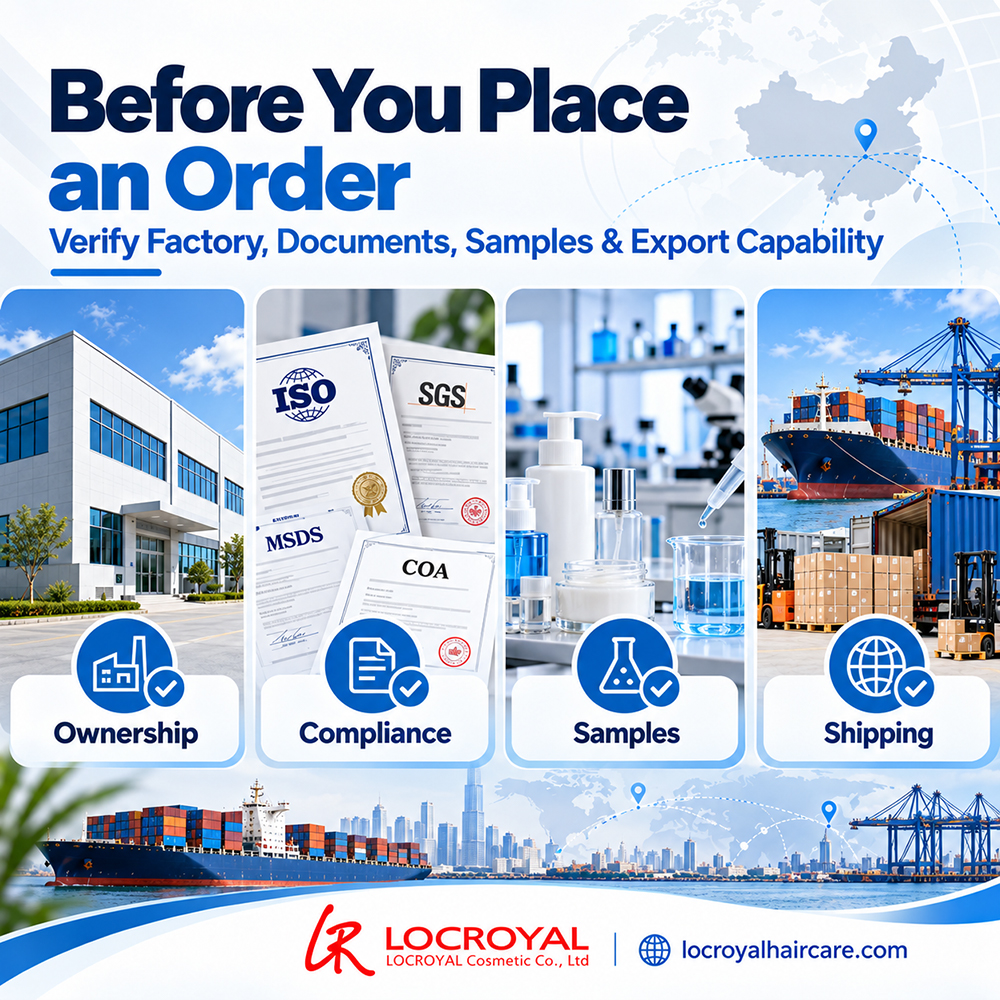
When buying hair care products from an overseas supplier, product samples are only the beginning. Global buyers also need documents that show who is manufacturing the product, how it is made, how quality is controlled, and whether the product can meet the requirements of the target market.
This is why hair care manufacturer documents are an important part of supplier qualification.
Professional hair manufacturer documents may include factory licenses, GMP or ISO documentation, product specifications, COAs, SDS/MSDS, testing reports, regulatory records, and export documents. However, the exact requirements depend on the product and destination country.
So, what should you request before placing a large order?
What Documents Should You Request From a Hair Care Manufacturer?
A practical document checklist can be divided into five areas: factory qualification, product quality, testing, regulatory compliance, and export.
| Category | Document | What It Demonstrates |
|---|---|---|
| Manufacturing | China Cosmetics Production License | Applicable cosmetic manufacturing authorization |
| Manufacturing | GMPC | Good manufacturing and quality-control practices |
| Manufacturing | ISO 22716 | Cosmetic GMP guidelines |
| US Market | FDA Facility Registration | Applicable U.S. cosmetic facility registration |
| US Market | FDA Product Listing Support | Support for applicable product-listing requirements |
| EU Market | CPNP Support | EU cosmetic notification support |
| UK Market | SCPN Support | Great Britain cosmetic notification support |
| Indonesia | BPOM Support | Indonesia cosmetic notification support |
| Quality | COA | Product or batch analytical results |
| Safety | SDS/MSDS | Safety, handling, storage, and transport information |
| Testing | SGS Report | Independent testing or inspection, depending on scope |
| Export | CFS | Free-sale documentation where applicable |
| Authorization | LOA | Authorization between relevant parties |
The important point is not simply collecting documents. You should check whether each document is current, relevant, and connected to the actual factory or product.
1. Factory Qualification & Certification Documents
Before approving a supplier, check the factory itself. Hair care manufacturing documents help buyers understand whether the manufacturer has the appropriate production facilities and quality systems.
For a Chinese manufacturer, buyers may request the applicable China Cosmetics Production License and factory qualification records. ISO 22716 is another important standard. It provides guidelines for the production, control, storage, and shipment of cosmetic products.
You can also request GMPC documentation and other factory-related certificates. Check the company name, factory address, certificate scope, issuing organization, and validity date.
These cosmetic manufacturer documents can help answer a simple question: does the supplier have the production and quality systems needed for your project? LocRoyal states that its production system follows ISO and GMPC standards and that it operates a 50,000㎡ manufacturing facility in Foshan.
2. Product Quality & Technical Documents
Once the factory has been qualified, focus on the product. Important hair care product documents may include:
- Product Specification
- Ingredient or formula information
- COA
- SDS/MSDS where applicable
- Product testing reports
- Batch quality records
- Packaging and labeling information
A COA for hair care products, or Certificate of Analysis, records analytical or quality results against agreed specifications. Depending on the product, specifications may include appearance, odor, pH, viscosity, microbiological limits, or other product-specific tests.
An SDS for hair care products provides safety information related to handling, storage, and transportation where applicable. Before approving documents, make sure they correspond to the final formula. If the formula changes after testing, some supporting hair care compliance documents may need to be reviewed again.
3. Product Testing & Quality Documents
Testing provides additional evidence that the product meets agreed requirements. Depending on the product, hair care product testing reports may cover microbiological, physical, chemical, stability, compatibility, or performance testing.
Third-party laboratories such as SGS can provide cosmetic testing services, including physical and chemical testing, microbiological testing, stability testing, and performance testing. When reviewing a report, check:
- Product or sample name
- Test date
- Laboratory
- Tests performed
- Results
- Applicable standards
- Sample identification
A third-party report should not automatically be treated as proof that a product is approved for every market. Its scope matters. The same applies to a COA for hair care products. Ideally, the COA should clearly identify the relevant product and production batch.
4. Regulatory & Market Compliance Documents
Regulatory requirements vary by country. A document suitable for the U.S. market may not satisfy EU or UK requirements.
United States
For the U.S., ask whether the manufacturer can support applicable FDA facility registration and cosmetic product listing requirements under MoCRA. However, FDA registration or product listing should not be described as FDA approval. The FDA states that cosmetic facility registration and product listing are not approval programs.
European Union
For the EU market, ask about CPNP support and the information required for the Product Information File and safety assessment. The European Commission states that CPNP is the EU’s online notification system for cosmetic products. Once a product has been notified through CPNP, there is no additional national notification within the EU.
United Kingdom
For Great Britain, cosmetic products must be notified through the SCPN, and products must have a Responsible Person.
Indonesia
For Indonesia, ask whether the manufacturer has experience supporting BPOM cosmetic notification requirements and preparing the necessary hair care compliance documents. The key lesson is simple: tell your manufacturer your target market before finalizing the formula and packaging.
5. Shipping & Export Documents
Your product may be ready for production, but international shipping also requires the right paperwork.
Depending on the shipment and destination, hair manufacturer documents may include:
- Commercial invoice
- Packing list
- Certificate of origin
- Shipping documents
- Certificate of Free Sale where applicable
- Letter of Authorization where applicable
A CFS may be requested by certain markets as evidence related to the product’s sale or marketing status. Requirements differ between countries. An LOA can establish that one company has authorized another party to perform a defined activity, such as registration or distribution. Ask your manufacturer which party prepares each document and when you will receive it.
What Documents Are Needed Before Mass Production?
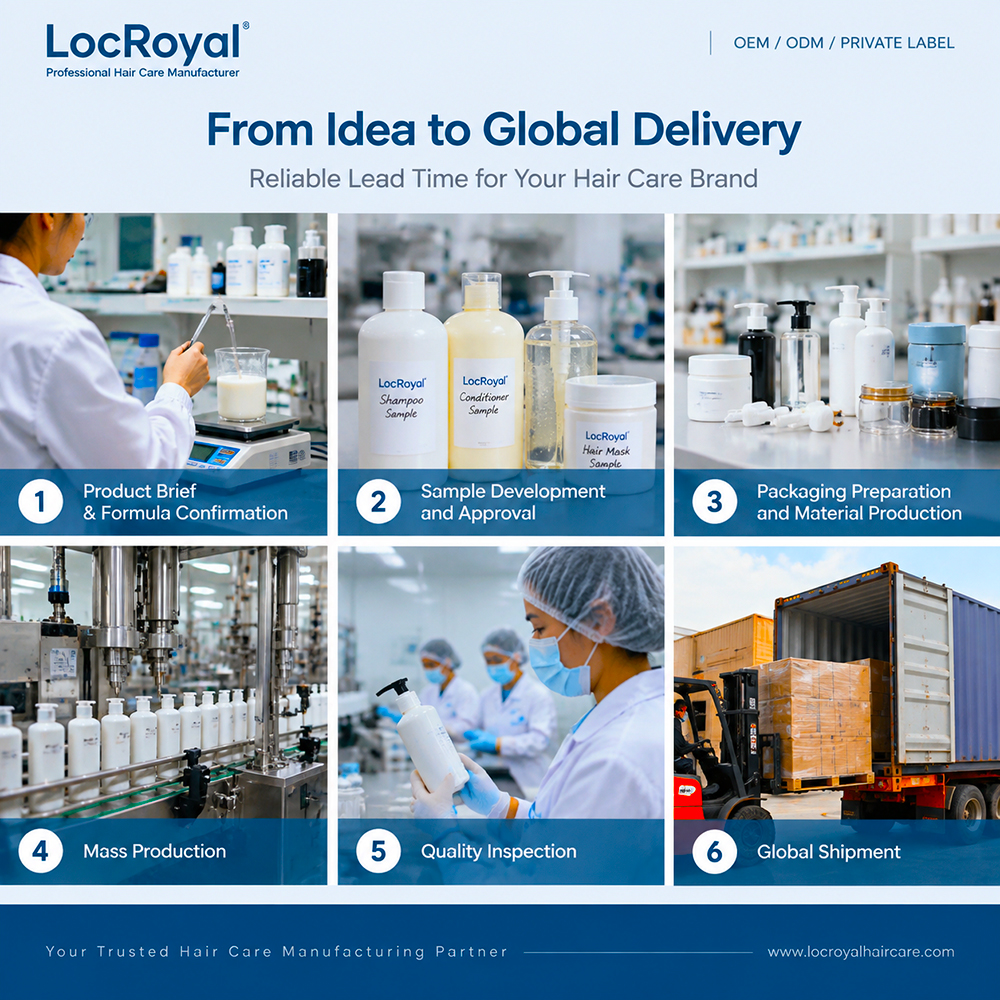
Before moving from samples to mass production, create a final checklist. At minimum, confirm:
- Final formula or ingredient information
- Product specification
- Packaging and label details
- COA requirements
- SDS/MSDS where applicable
- Required testing
- Factory qualification documents
- Target-market compliance requirements
- Production and batch identification
- Export documentation
Most importantly, make sure the approved sample, final formula, packaging, and production version are consistent.
Do All Hair Care Products Require the Same Documents?
No.
Different products can have different documentation requirements. Shampoo, conditioner, hair oil, hair masks, scalp treatments, hair color, and chemical treatments may require different testing or regulatory review.
The destination market also matters.
This means private label hair care documentation should be prepared based on the product, claims, formula, packaging, and destination country.
Instead of asking a supplier, “What documents do you have?” ask:
“Which documents apply to my exact product and target market?”
That question can help you identify missing requirements before production begins.
Questions to Ask Your Hair Care Manufacturer Before Ordering
Before placing your order, ask:
1. Which factory will manufacture my products?Confirm the legal company and production address.
2. Can you provide current factory certificates?Request applicable licenses, ISO 22716, GMPC, and other relevant records.
3. Can you provide a COA for my products?Confirm what specifications and batch tests will be included.
4. Can you provide an SDS?Ask whether an SDS is available and applicable to your finished product.
5. What testing reports are available?Confirm whether testing is performed internally or by an independent laboratory.
6. Can you support my target market?Tell the manufacturer whether you are selling in the U.S., EU, UK, Indonesia, or another market.
7. Who handles regulatory notification?Define responsibilities between the manufacturer, brand owner, importer, and Responsible Person.
8. Can you provide private label hair care documentation?Ask how formula, testing, packaging, and compliance records will be organized.
9. Which documents will I receive before production?Get the list in writing.
10. Which documents come with the shipment?Confirm the export paperwork before goods leave the factory.
Need Help Preparing Your Hair Care Project?
Choosing a manufacturer is about more than product quality. You also need a supplier that understands formulation, production, quality control, documentation, and international markets.
Foshan BonnieCo Biotechnology Co., Ltd. (BonnieCo Group), Self-Owned Factory, Own Brands, Global Certifications, 15 Years of Smart Beauty Manufacturing.
The group operates three core business divisions:
- Guangzhou LocRoyal Cosmetics Co., Ltd.: Hair care OEM plus self-owned brands including PROINSCARE and PURC.
- Guangzhou BonnieCo Cosmetics Co., Ltd.: Skin care and color cosmetics OEM plus self-owned brands including SenseInsCare and Jellyprim.
- A 50,000㎡ self-owned production base in Foshan.
These details are presented by BonnieCo Group and LocRoyal on their official website.
For buyers comparing suppliers, documentation should be part of the decision-making process from the beginning. A manufacturer that can clearly organize hair care manufacturing documents, testing records, regulatory information, and export paperwork can make international sourcing easier.
If you are looking for a hair care manufacturing partner, explore LocRoyal’s OEM and private-label services at hair care manufacturing partner.
Frequently Asked Questions
1. What hair care manufacturer documents should buyers request?
Common hair care manufacturer documents include factory certificates, ISO 22716 or GMP documentation, product specifications, COAs, SDS/MSDS where applicable, testing reports, regulatory documents, and export paperwork.
2. What is a COA for hair care products?
A COA for hair care products records quality or analytical results for a specific product or batch against agreed specifications.
3. Why do I need an SDS for hair care products?
An SDS for hair care products provides safety information for handling, storage, and transportation where applicable.
4. What are hair care compliance documents?
They are documents used to support compliance with applicable requirements in the target market, such as safety, testing, labeling, and notification information.
5. Can manufacturers provide hair care product testing reports?
Yes. Manufacturers may provide internal or independent hair care product testing reports, depending on the product and testing requirements.
6. What private label hair care documentation should I request?
Request the product specification, formula or ingredient information, COA, SDS where applicable, testing reports, packaging information, and market-specific regulatory documents.
7. Does every hair care product need the same documents?
No. Hair care product documents vary according to the formula, product type, claims, destination market, and regulatory requirements.
8. Can a manufacturer support CPNP?
A manufacturer may support the preparation of information for CPNP notification, but responsibilities should be clearly agreed with the EU Responsible Person.
9. What should I check before mass production?
Check the final formula, product specification, packaging, COA requirements, SDS, testing, factory qualification, and target-market compliance requirements.
10. Does LocRoyal provide private label hair care documentation?
LocRoyal provides OEM/ODM and private-label hair care services. Buyers should confirm the exact hair care manufacturing documents available for their specific product and target market.

-1-300x300.jpg)