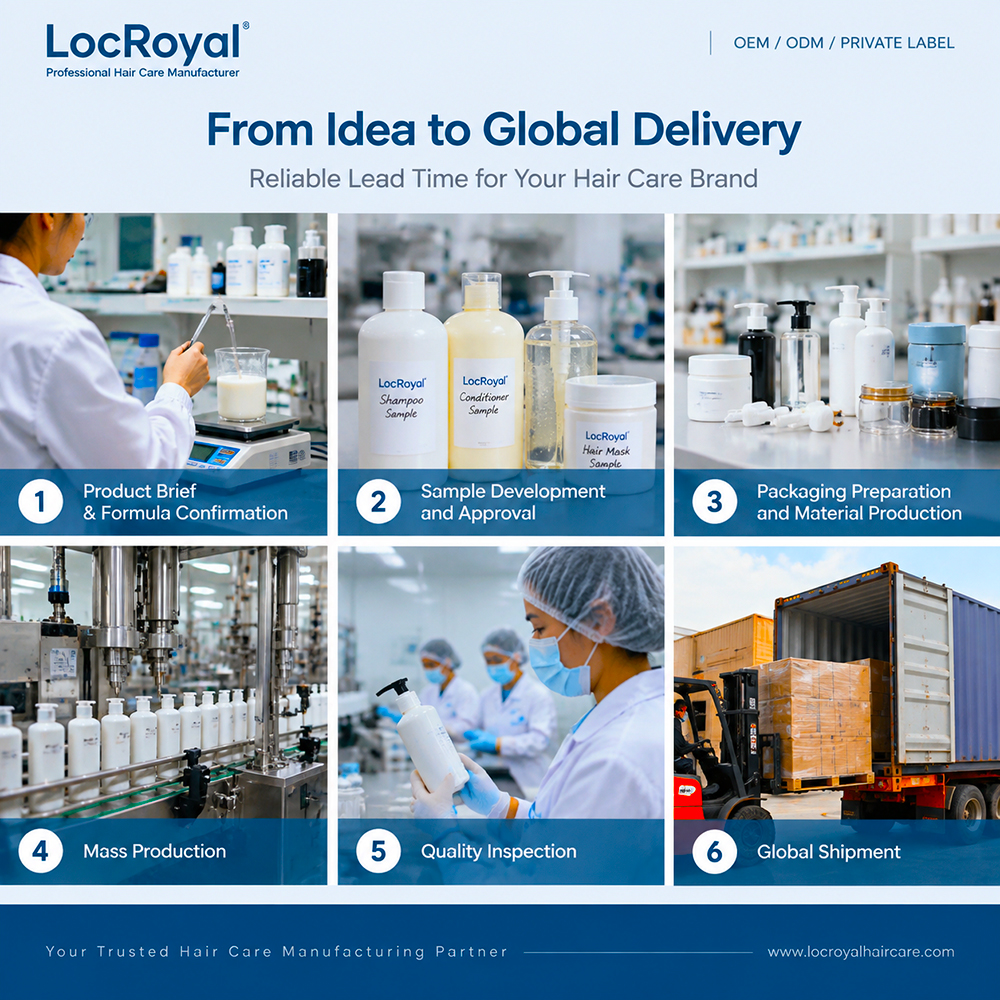
How long does it take to turn a hair care product idea into a finished product?
For brands entering the beauty market, understanding hair care manufacturing lead time is essential for planning product launches, marketing campaigns, inventory, and delivery schedules. The total timeline includes much more than factory production. Formula development, sample approval, packaging preparation, material procurement, quality inspection, and shipping can all affect the final delivery date.
A simple private label shampoo using an existing formula and standard packaging may move through production relatively quickly. A fully customized product with a new formula, custom packaging, and additional testing may require considerably more time.
As an experienced OEM and ODM supplier, LocRoyal Cosmetics supports hair care brands with formulation, packaging, manufacturing, and quality control. The company operates as part of BonnieCo Group, which states that it has 15 years of beauty manufacturing experience and a 50,000㎡ self-owned production base.
Understanding each stage can help brands create a more realistic private label production timeline and avoid unnecessary delays.
What Determines Hair Care Manufacturing Lead Time?
There is no single timeline that applies to every hair care project. Several factors can influence hair care production time, including:
- Formula complexity: Existing formulas are generally easier to prepare than completely customized formulas.
- Customization level: New textures, fragrances, colors, ingredient profiles, or product concepts may require additional development and sampling.
- Packaging: Standard bottles and components are usually easier to arrange than custom packaging or new molds.
- MOQ: Order quantity can affect production planning and material procurement.
- Testing requirements: Additional quality, compatibility, or market-specific testing may extend the schedule.
- Market requirements: Different target markets may have specific labeling, testing, documentation, or regulatory requirements.
Because these factors can overlap, the total OEM hair care lead time should be discussed with the manufacturer based on the specific product rather than estimated by adding every stage together.
Stage 1: Product Brief and Formula Confirmation
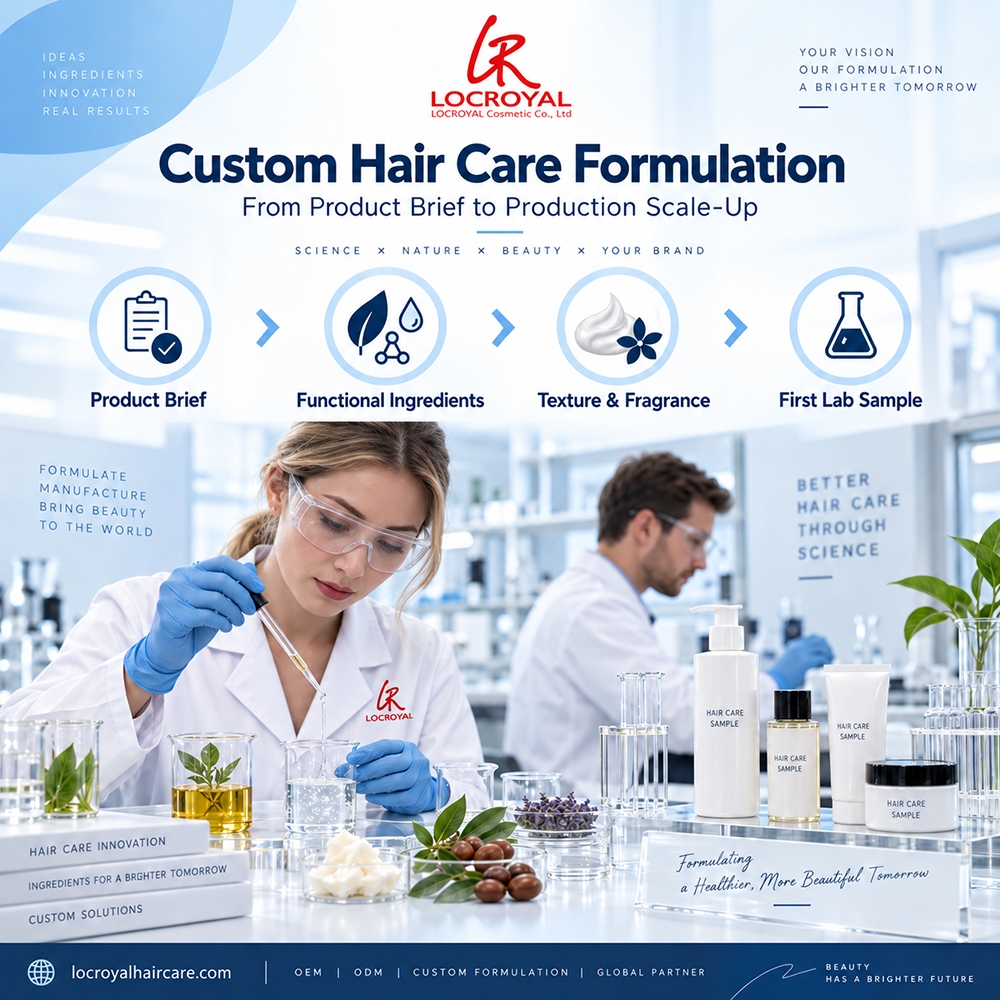
The project begins with a clear product brief. This should define the product type, target market, desired ingredients, fragrance, texture, packaging preferences, order quantity, and other important requirements.
Existing Formula
If a brand selects an existing formula, the development process can be relatively straightforward. The manufacturer can review the formula specifications, confirm the product requirements, and move toward sampling.
Customized Formula
A customized formula may require more development work. Adjustments can be made to achieve the desired texture, fragrance, color, viscosity, performance, and ingredient profile.
The original project planning range for straightforward formula development is approximately 1–4 weeks, although more complex projects can take longer.
Providing a complete product brief at the beginning can help reduce unnecessary back-and-forth during development.
Stage 2: Sample Development and Approval
Sampling is one of the most important stages of the private label production timeline because it gives the brand an opportunity to evaluate the product before mass production.
The process generally follows four steps:
First Sample → Feedback → Revision → Final Approval
First Sample
The manufacturer prepares the initial sample based on the agreed product requirements. The brand can evaluate characteristics such as texture, fragrance, color, viscosity, appearance, and overall product feel.
Feedback
After reviewing the first sample, the brand provides feedback. Clear and consolidated feedback is helpful because it allows the manufacturer to understand all required changes at once.
Revision
If changes are required, the formula or product specifications may be adjusted, and another sample may be prepared.
Final Approval
Once the brand is satisfied with the sample, the final formula can be approved for production.
Sampling lead time is typically around 1–3 weeks per sample round. Projects requiring several revisions can therefore take longer.
For brands trying to shorten their sampling lead time, providing detailed requirements and consolidated feedback can help reduce unnecessary sample rounds.
Stage 3: Packaging Preparation and Material Production
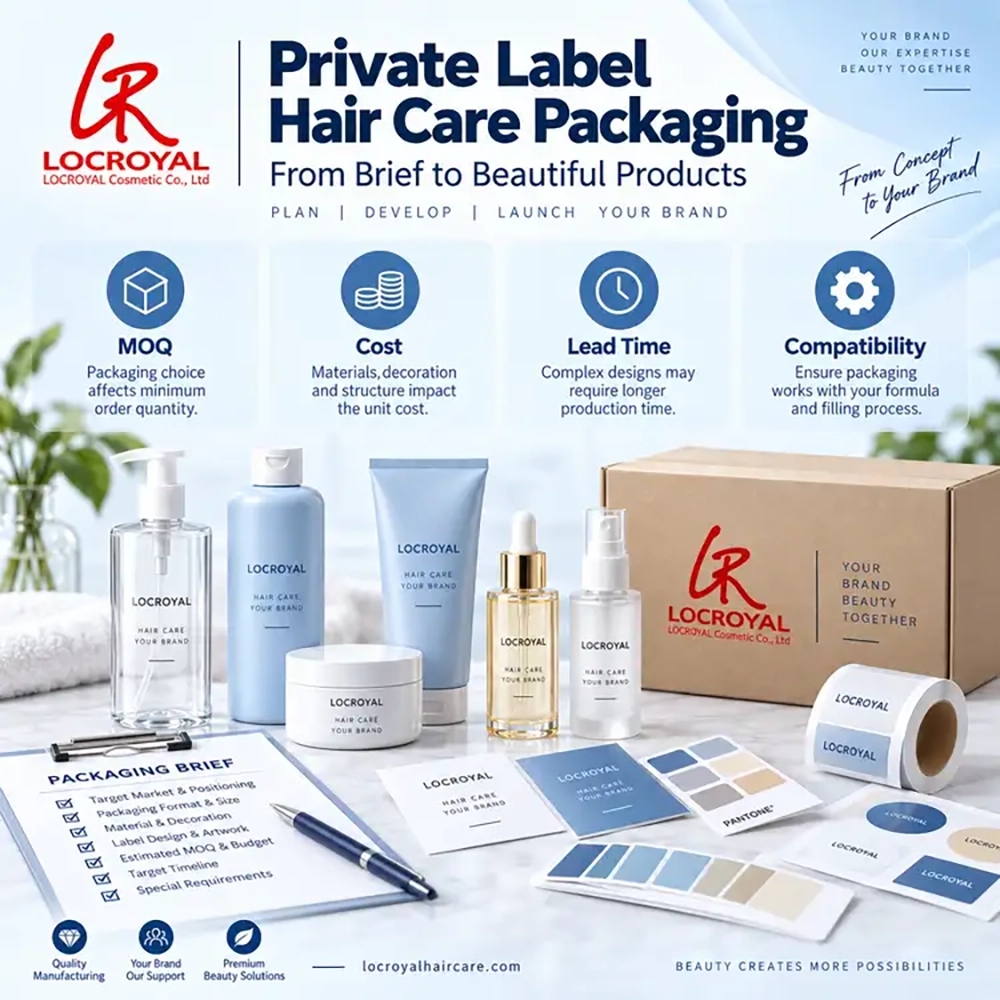
Packaging is often one of the factors that can affect the overall hair care manufacturing lead time.
The packaging process may involve:
- Bottle
- Pump
- Cap
- Tube or jar
- Label
- Printing
- Carton
Standard stock packaging is generally easier to arrange than custom bottles, special printing, or packaging that requires a new mold. Packaging preparation can take approximately 2–6 weeks, depending on the level of customization.
At the same time, the manufacturer needs to prepare the raw materials and packaging components required for production. Standard ingredients and packaging materials are generally easier to plan than unusual ingredients, special components, or customized parts. Material procurement may also take approximately 2–6 weeks, depending on the project.
One advantage of planning formula and packaging preparation at the same time is that some stages can overlap. This can help reduce the overall project timeline. However, a delayed bottle, label, pump, carton, or ingredient can prevent mass production from starting as scheduled.
Stage 4: Mass Production and Quality Control
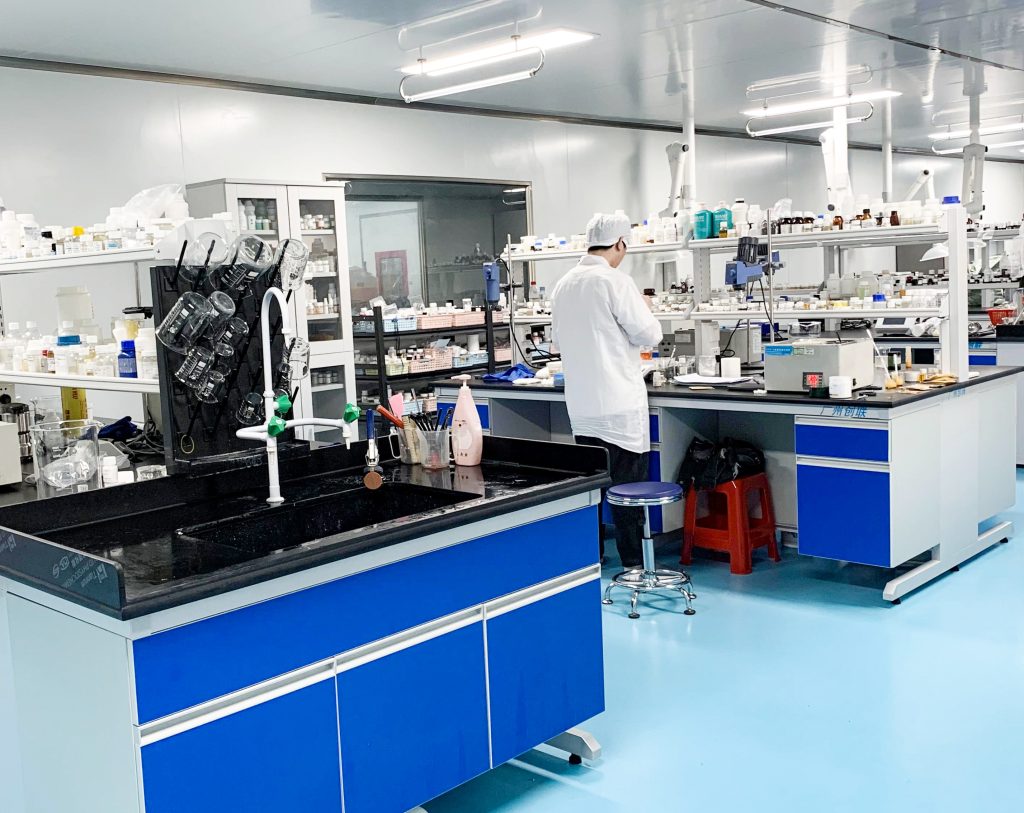
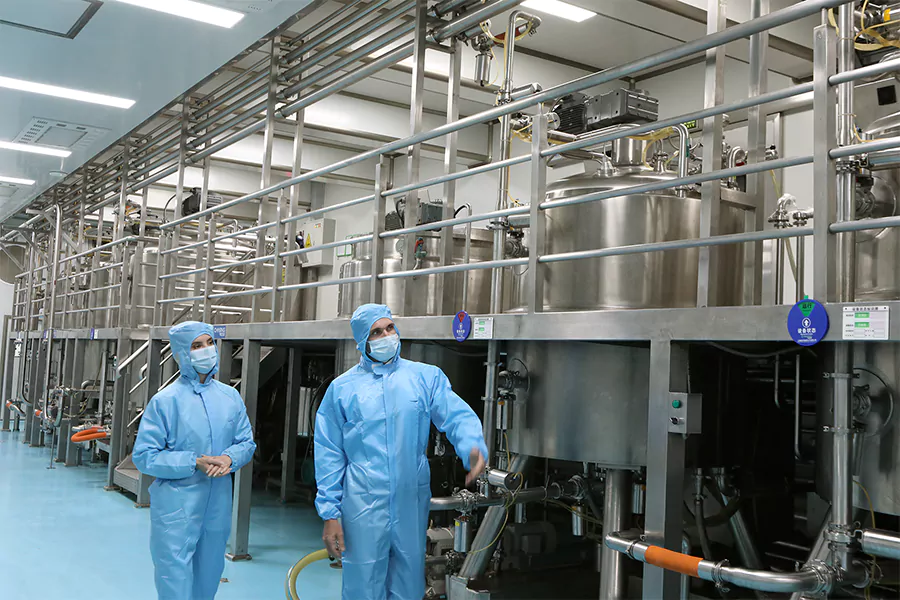
Once the formula, packaging specifications, materials, and order details have been approved, the project can move into mass production.
The production process may include:
- Raw-material inspection
- Measurement
- Mixing or emulsification
- Semi-finished product inspection
- Filling
- Packaging
- Final quality inspection
The exact process depends on the product type and manufacturing requirements. The mass production timeline is approximately 2–4 weeks after the required materials are available and production has been approved. Order quantity, product type, packaging format, production schedule, and manufacturing process can all affect this period.
Quality control is also an essential part of production. Depending on the product, inspections may cover physical, chemical, sensory, and microbiological characteristics. LocRoyal states that its quality system includes inspection of raw materials, semi-finished products, filling and packing processes, and finished products.
Quality inspection may take several days to approximately 1–2 weeks, depending on the testing requirements. Including QC in the original production plan helps brands avoid setting a launch date based only on factory production time.
Stage 5: Warehouse Preparation and Global Shipment
After production and quality approval are completed, the finished products need to be prepared for delivery. Warehouse and shipment preparation can include:
- Carton packing
- Palletizing
- Shipping marks
- Batch information
- Export documents
- Shipment arrangements
The final hair care delivery time depends on the destination, shipping method, customs procedures, carrier schedule, and other logistics factors.
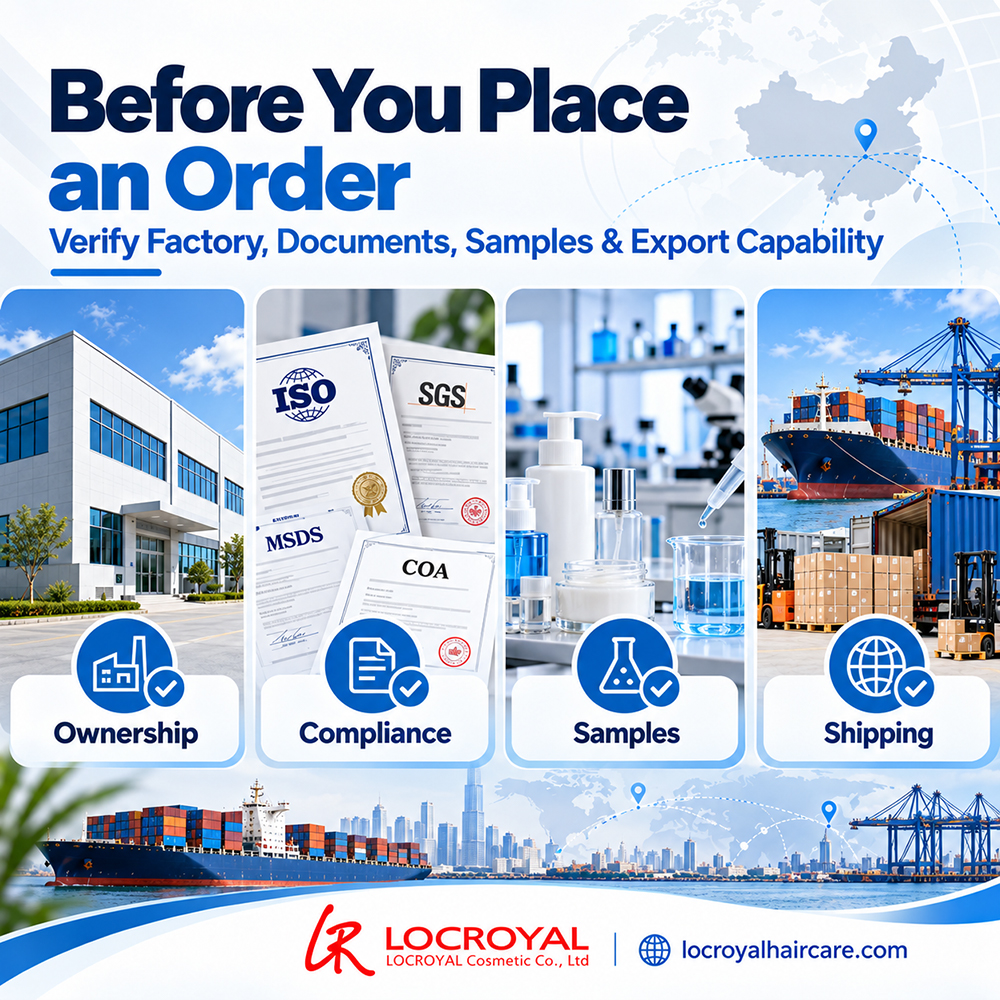
For international brands, shipping requirements should be discussed with the manufacturer before production begins. This helps ensure that the necessary documents, packaging information, and delivery arrangements are prepared in advance.
Therefore, the complete private label production timeline does not end when the products leave the production line. Manufacturing, inspection, packing, documentation, and transportation all need to be considered.
What Can Cause Production Delays?
Several common issues can extend hair care production time:
- Formula changes: Repeated changes to the formula can create additional sample and approval rounds.
- Packaging changes: Changing a bottle, pump, label, carton, or printing specification after materials have been ordered can require new materials.
- Sample revisions: Multiple rounds of sampling naturally increase development time.
- Material shortages: Unavailable ingredients or packaging components can prevent production from starting.
- Regulatory requirements: Additional market-specific testing, documentation, or labeling requirements may extend the schedule.
- Shipping issues: Customs procedures, carrier schedules, transportation problems, and destination requirements can affect delivery.
Clear communication is therefore important throughout the project. Brands should confirm product specifications, packaging, order quantity, target market, and delivery requirements as early as possible.
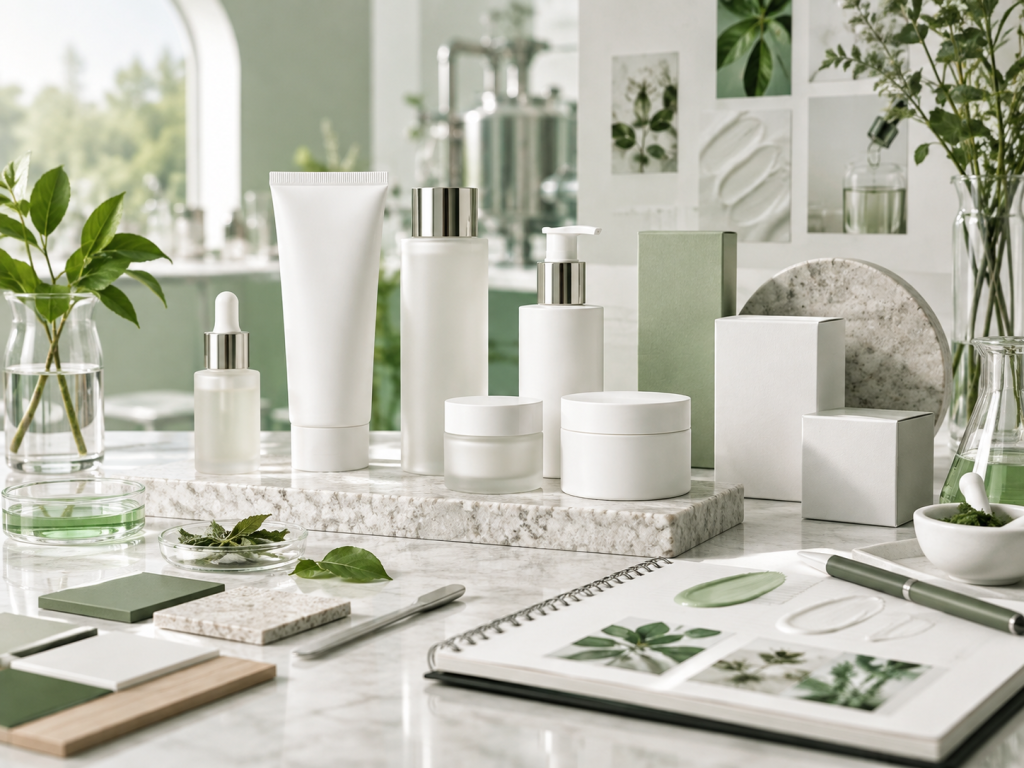
How Brands Can Reduce Hair Care Production Lead Time
Brands can take several practical steps to reduce avoidable delays.
Prepare the product brief early: Complete product requirements give the manufacturer a clearer starting point for formula development and sampling.
Confirm packaging early: Standard packaging can generally be arranged more easily than highly customized components. Packaging artwork and specifications should also be prepared in advance.
Approve samples quickly: Once a sample is received, consolidated feedback can help the manufacturer make revisions efficiently.
Provide market requirements: Sharing the target market and applicable requirements at the beginning helps the manufacturer plan testing, labeling, documentation, and other necessary steps.
Brands can also consider working with an integrated professional hair care manufacturer that supports formulation, packaging, manufacturing, and quality control through one supply chain. This can make it easier to coordinate the different stages of a project.
Typical Private Label Hair Care Project Timeline
Every project is different, but the following process provides a useful overview of how a typical project can move from concept to shipment:
Product Brief
↓
Formula Development
↓
Sample Approval
↓
Packaging Preparation
↓
Mass Production
↓
QC Inspection
↓
Shipment
The stages do not always happen strictly one after another. For example, packaging preparation can sometimes take place while formula development or sampling is underway.
A simple private label product using an existing formula and standard packaging may follow a shorter schedule. A fully customized product may require additional development, sample revisions, custom packaging, testing, and documentation.
For this reason, brands should request a project-specific production schedule before setting a firm launch date.
10 FAQs About Hair Care Manufacturing Lead Time
1. How long is hair care manufacturing lead time?
There is no single fixed timeline. Formula development, sampling, packaging, materials, production, testing, and shipping can all affect the final schedule.
2. What is private label production lead time?
It is the time required to develop, manufacture, inspect, pack, and prepare a branded hair care product for delivery.
3. How long does shampoo manufacturing take?
Shampoo manufacturing lead time depends on the formula, order quantity, packaging, materials, testing requirements, and factory schedule.
4. What affects sampling lead time?
Formula complexity and the number of revision rounds can affect sampling lead time. Clear product requirements and consolidated feedback can help reduce unnecessary revisions.
5. How long does packaging take?
Packaging preparation may take approximately 2–6 weeks, depending on the packaging type and level of customization.
6. What is included in hair care production time?
Hair care production time generally includes manufacturing, filling, and packing. Quality inspection and shipping should be considered separately when planning the complete project.
7. Does LocRoyal provide custom hair care formulas?
Yes. LocRoyal offers OEM and ODM formulation and product development services for hair care brands.
8. Does LocRoyal provide packaging services?
Yes. Its services include packaging design and customization, as well as packaging-material inspection and compatibility testing.
9. What hair products can LocRoyal manufacture?
Its published product range includes shampoo, conditioner, hair masks, hair oils and serums, styling products, hair sprays, and keratin treatments.
10. How can brands shorten the mass production timeline?
Brands can reduce avoidable delays by preparing product requirements early, approving formulas and artwork promptly, considering standard packaging, preparing materials in advance, and coordinating closely with their OEM/ODM manufacturer.
Conclusion
Understanding the complete hair care manufacturing lead time makes product planning easier and helps brands set more realistic launch dates.
The process involves much more than factory production. Formula confirmation, sampling, packaging preparation, material procurement, mass production, quality inspection, warehouse preparation, and international shipping can all affect the final hair care delivery time.
For a simple private label product, the process may be relatively straightforward. A highly customized product can take longer because it may require additional formula development, sample revisions, custom packaging, testing, and market-specific requirements.
The best approach is to discuss your product requirements with your manufacturer early and request a detailed timeline based on your formula, packaging, order quantity, target market, and destination.