Introduction
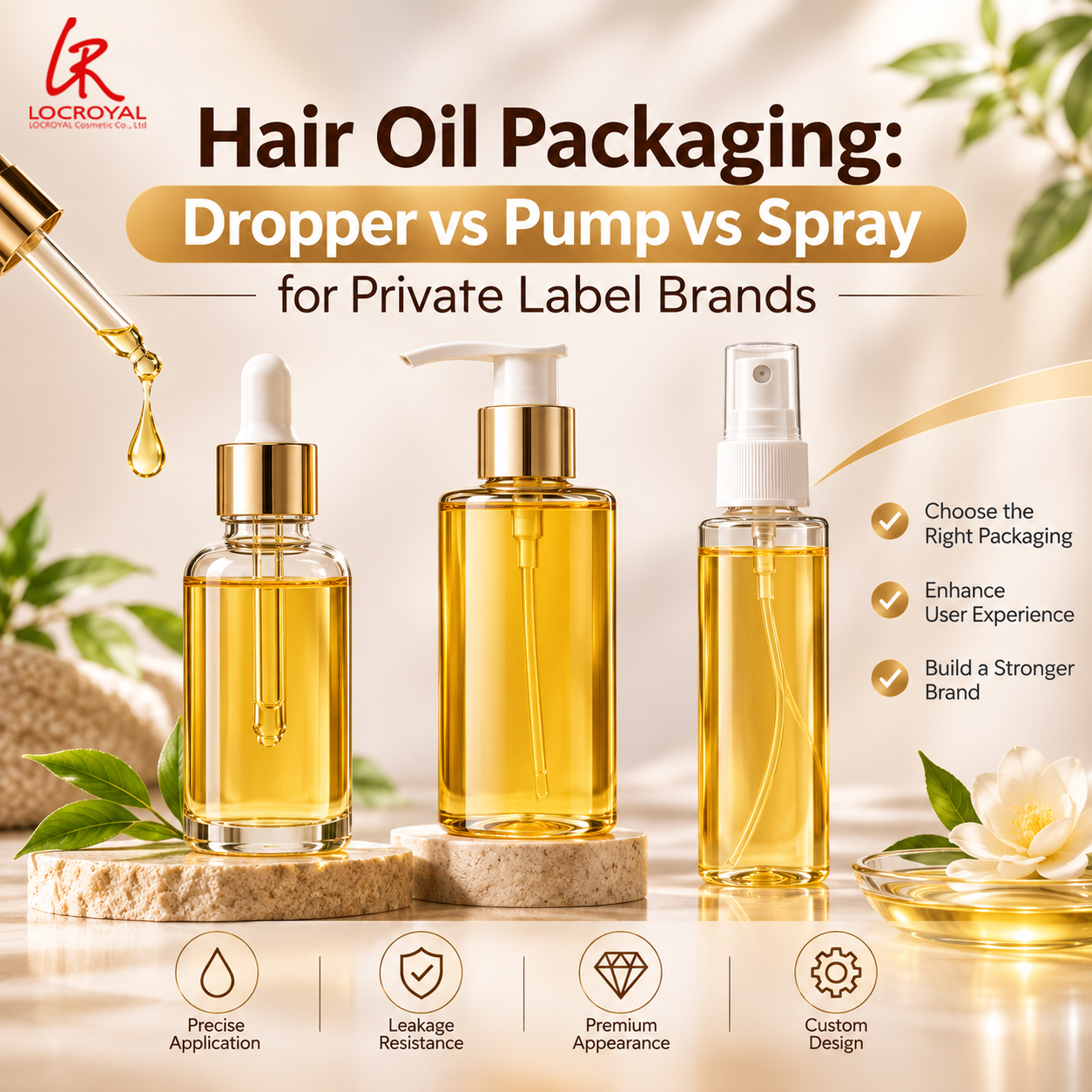
Choosing the right hair oil packaging affects more than appearance. It influences how customers apply the formula, how much they dispense, how easily they carry the product, and how well it is protected during shipping. Droppers, pumps, and sprays are common options, but each suits different formulas and uses.
Explore LocRoyal’s private label hair oil solutions for information about product development and packaging customization.
Why Packaging Matters for Hair Oil Products
Hair oils are usually applied in smaller amounts than shampoo, so the bottle should make targeted application easy.
Consider oil texture, dispensing volume, formula compatibility, leakage resistance, consumer convenience, brand positioning, and shipping requirements. Packaging is a complete system: the bottle, closure, pump or dropper, seals, labels, and decoration must work together.
Dropper Bottles for Hair Oils
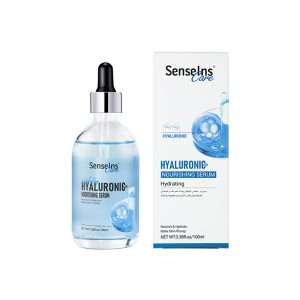
A hair oil dropper bottle is often used for concentrated oils, scalp treatments, and botanical blends.
How Dropper Packaging Works
A dropper uses a pipette and bulb to draw up and release oil. The amount depends on the pipette opening, formula viscosity, and application method; it is not automatically an exact dose.
Advantages of Dropper Bottles
Droppers help customers apply small amounts to selected areas. This format may suit concentrated scalp oils and botanical treatments.
Limitations of Dropper Bottles
The pipette may touch the scalp or fingers, and the amount dispensed can vary. Glass is also heavier than many plastics and can break if dropped.
Pump Bottles for Hair Oils and Serums
A hair oil pump bottle can suit leave-in oils and hair serums packaging that is used regularly.
How Pump Dispensers Work
A pump head and dip tube draw product from the bottle when pressed. Output depends on the mechanism and formula, so test it.
Advantages of Pump Bottles
Pumps can make daily application easier. Depending on the mechanism, they can deliver a repeatable amount with each press.
Limitations of Pump Packaging
The pump must suit the formula’s viscosity. Thick oils may dispense slowly or clog the mechanism. Other possible problems include leakage, inconsistent output, and difficulty priming. Test the complete system with the final formula.
Spray Bottles for Hair Oil Formulas
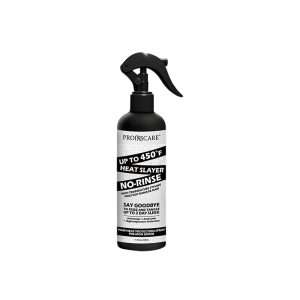
A hair oil spray bottle distributes product widely, but not every oil suits a standard nozzle.
Fine-Mist Spray vs Conventional Spray
Fine-mist sprayers release small droplets; conventional sprays may create a more focused stream. Formula viscosity affects performance. Thick oils may not pass through small openings or form the intended mist.
When Spray Packaging May Work
Spray packaging may suit lightweight formulas when the product flows properly through the selected mechanism. Confirm that the formula passes through the nozzle, the spray pattern suits the application, and repeated use does not cause clogging. Test dispensing consistency, compatibility, and leakage before approval.
Spray Packaging Limitations
Thick formulas can spray unevenly or block the nozzle. Oil mist may also make nearby surfaces slippery. Consider clear usage instructions and any warnings appropriate to the product and target market.

Dropper vs Pump vs Spray: Packaging Comparison
Choose according to formula properties, customer needs, and brand positioning.
| Factor | Dropper | Pump | Spray |
|---|---|---|---|
| Application | Targeted drops | Controlled pumping | Wider distribution |
| Formula suitability | Depends on viscosity and pipette | Depends on pump design | Requires suitable spray performance |
| Dosage | User-controlled | Pump-dependent | Actuation-dependent |
| Brand appearance | Premium serum concepts | Daily-use or salon concepts | Lightweight mist concepts |
| Convenience | Targeted application | Practical routine use | Depends on spray pattern |
| Leakage risk | Must be tested | Must be tested | Must be tested |
| Cost | Supplier-dependent | Supplier-dependent | Supplier-dependent |
No format is best for every hair oil. A concentrated scalp treatment may suit a dropper, while a daily-use serum may be easier to apply with a pump.
Choose Packaging Based on Hair Oil Formula Texture
Formula texture should guide dispenser selection. Before ordering custom hair oil bottles, consider how easily the product flows and how customers will apply it.
Lightweight and Fluid Hair Oils
Lightweight oils may work with suitable droppers and pumps. Some may also suit spray mechanisms. Check the opening size, pump output, and spray pattern with the finished formula.
Rich and More Viscous Hair Oils
Thicker oils can be harder to dispense. A narrow pipette may slow the flow, while a pump may need a mechanism designed for higher viscosity. Spray systems can be especially challenging if the oil cannot pass through the nozzle.
Oils Containing Suspended Particles
Formulas containing decorative or botanical particles need additional evaluation. Check whether particles settle, affect product uniformity, or block the dispenser.
Hair Oil Bottle Materials and Sizes
Choose material and volume for protection and usability.
Clear and Amber Glass Bottles
Glass can create a premium appearance and is often considered for concentrated oils. Clear glass displays the formula, while amber glass offers a different visual style. Glass is heavier than many plastics and can break during handling or transport.
PET and Other Plastic Bottles
Plastic bottles offer lightweight options and flexibility in shapes, colors, and finishes. PET may suit brands seeking a transparent container. Other plastics may be considered for different package requirements.
Common Fill Volumes
Possible concept sizes include 30 ml for compact treatments, 50 ml for selected retail oils, 100 ml for regular home use, and 150 ml for larger formats. These are planning examples, not confirmation of stock availability.
Bottle Shape and Dip Tube Fit
Round, square, and slender bottles offer different design options. Check that the pump tube reaches close to the bottle bottom without bending.

Logo, Labels and Printing Options
Decoration should suit the bottle material and remain readable during use.
Pressure-Sensitive Labels
Adhesive labels allow brands to customize colors, layouts, and product details. Check that the label material and adhesive resist normal contact with oil and remain attached during use.
Direct Printing and Decoration
Screen printing, hot foil stamping, and matte or glossy finishes create different brand effects. The right process depends on bottle material, shape, artwork, and order quantity.
Cartons and Secondary Packaging
Outer cartons can improve presentation and help protect bottles, especially glass packaging.
Packaging Compatibility and Quality Testing
Test the complete package with the final formula.
Leakage and Closure Testing
Check bottle necks, caps, pumps, and seals for leakage during storage, handling, and transportation.
Formula and Material Compatibility
Evaluate interactions between the oil and the bottle, seals, coatings, adhesives, and other components. Look for changes in product appearance, odor, or packaging condition.
Pump and Spray Performance
Check pump priming, dispensing consistency, and leftover product. For sprays, test the spray pattern and nozzle blockage. Droppers should also be checked for flow and closure security.
Label and Decoration Durability
Confirm that labels remain attached and printing stays readable during normal handling and accidental contact with oil.
How Packaging Affects MOQ, Cost and Lead Time
Costs include bottles, dispensers, seals, labels, cartons, printing, and assembly. Each component may have its own MOQ; custom molds can add development steps.
Discuss the full specification with your supplier early. Confirm component availability, sampling arrangements, production timing, and quantities before setting a launch date. Confirm MOQs and prices with the supplier.
Hair Oil Packaging Brief Checklist
Prepare a clear brief before requesting a quotation for private label hair oil packaging. Include:
- Product type and intended use
- Formula texture and viscosity
- Target bottle volume
- Preferred glass or plastic material
- Dropper, pump, or spray preference
- Closure and sealing requirements
- Label and printing requirements
- Target market and estimated order quantity
- Target price range and desired launch date
Common Hair Oil Packaging Mistakes
Common mistakes when developing custom hair oil bottles include:
- Choosing a bottle based only on appearance.
- Ignoring formula and dispenser compatibility.
- Selecting a spray nozzle without testing the oil.
- Skipping leakage and dispensing tests.
- Forgetting separate MOQs for packaging components.
- Approving artwork before confirming final bottle dimensions.
Frequently Asked Questions
Is a dropper or pump better for hair oil?
A dropper can suit concentrated oils and targeted scalp application. A pump may be more convenient for daily-use oils and serums.
Can all hair oils be packaged in spray bottles?
No. Spray performance depends on viscosity and nozzle design. Some oils may clog the nozzle or produce uneven droplets. Compatibility testing is necessary.
Is glass or plastic better for hair oil packaging?
Glass is premium but heavier and breakable; plastic is lighter. Test either material with the formula.
Can I customize the bottle and label design?
Customization may include bottle shape, color, capacity, closure, labels, and printing, depending on supplier options and project requirements. See LocRoyal’s private label hair oil page for its product development and packaging information.
What packaging tests are needed before bulk production?
Check leakage, closure security, formula compatibility, dispensing, priming, spray pattern, clogging, and label durability.
Conclusion
Choosing the right hair oil packaging starts with understanding the formula and customer experience. Droppers support targeted application, pumps offer convenience for regular use, and sprays may work for suitable lightweight formulas. Each option requires attention to materials, dispensing, sealing, and testing.
Foshan BonnieCo Biotechnology Co., Ltd. (BonnieCo Group) operates three core business divisions:
Guangzhou LocRoyal Cosmetics Co., Ltd., providing hair care OEM services and self-owned brands including PROINSCARE and PURC; Guangzhou BonnieCo Cosmetics Co., Ltd., providing skin care and color cosmetics OEM services and self-owned brands including SenseInsCare and Jellyprim; and a 50,000㎡ self-owned production base in Foshan.
Self-Owned Factory · Own Brands · Global Certifications · 15 Years of Smart Beauty Manufacturing.
For brands planning a new hair oil or serum range, contact LocRoyal about private label hair oil manufacturing to discuss formula development, packaging customization, and production requirements.