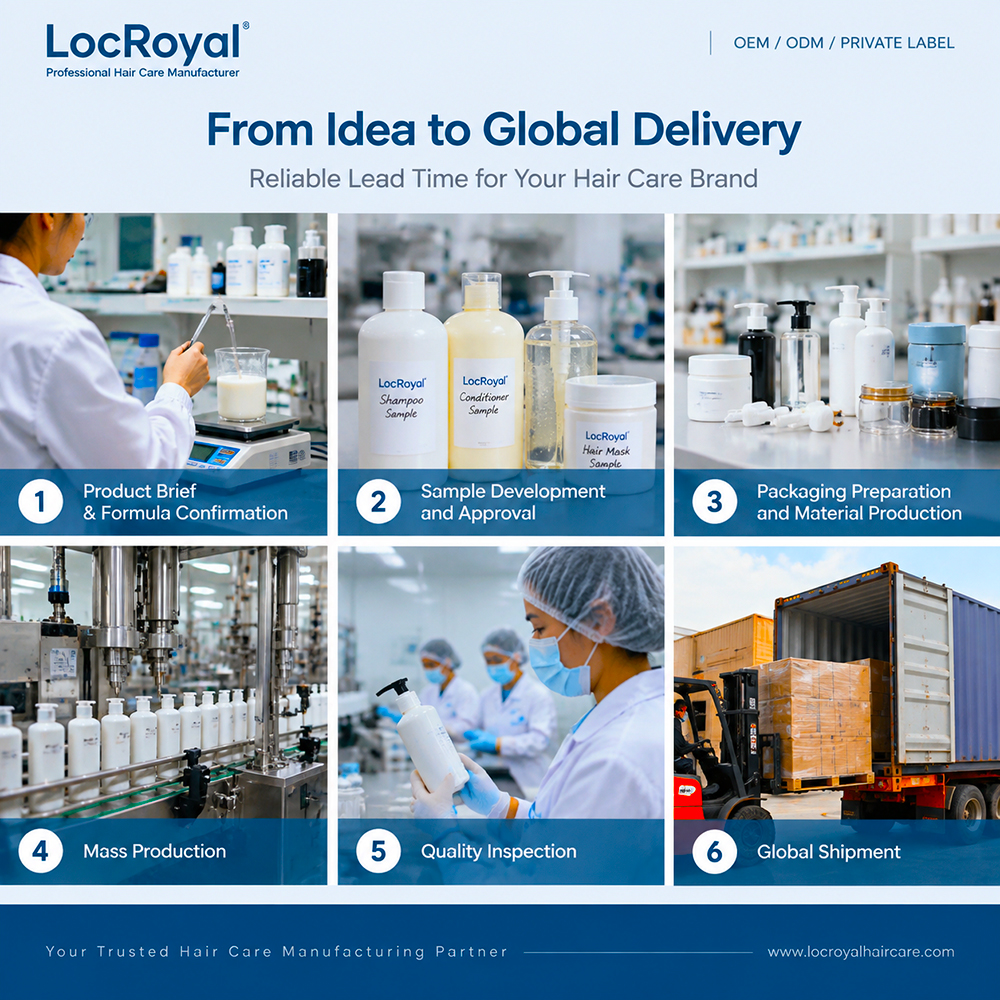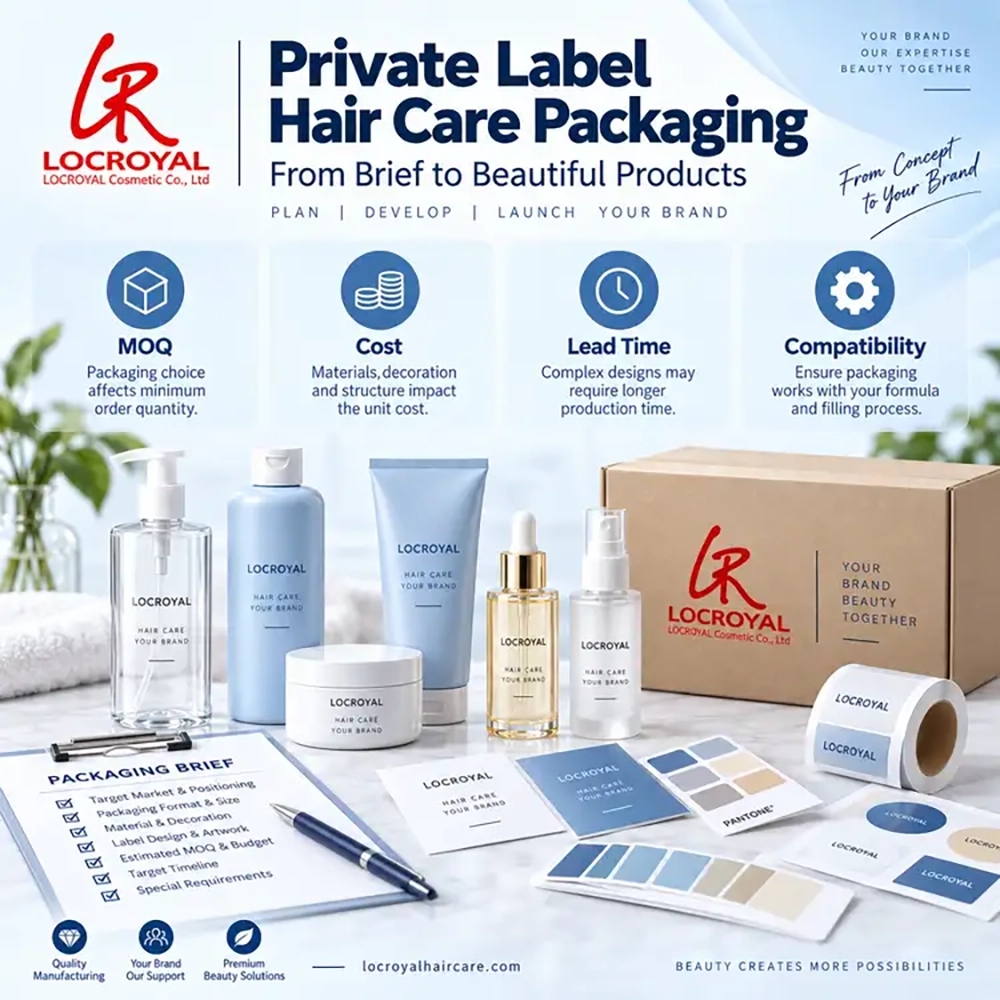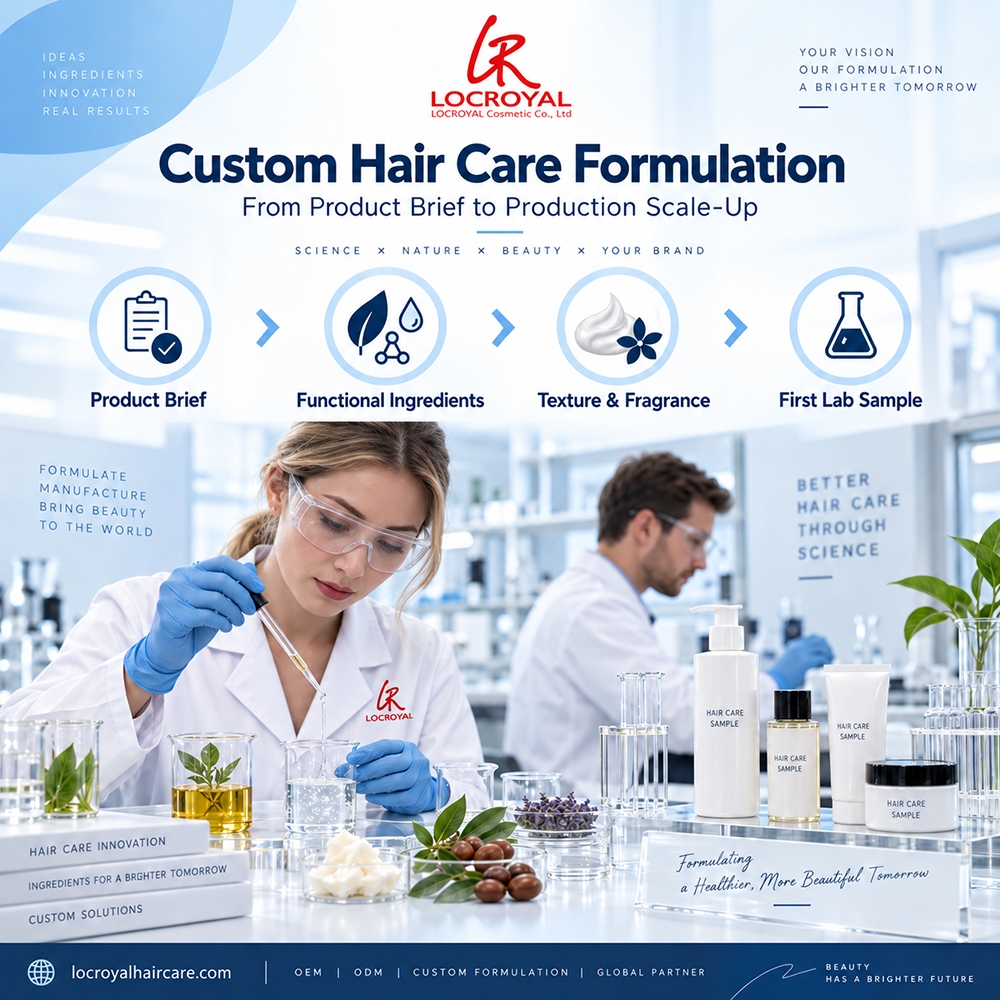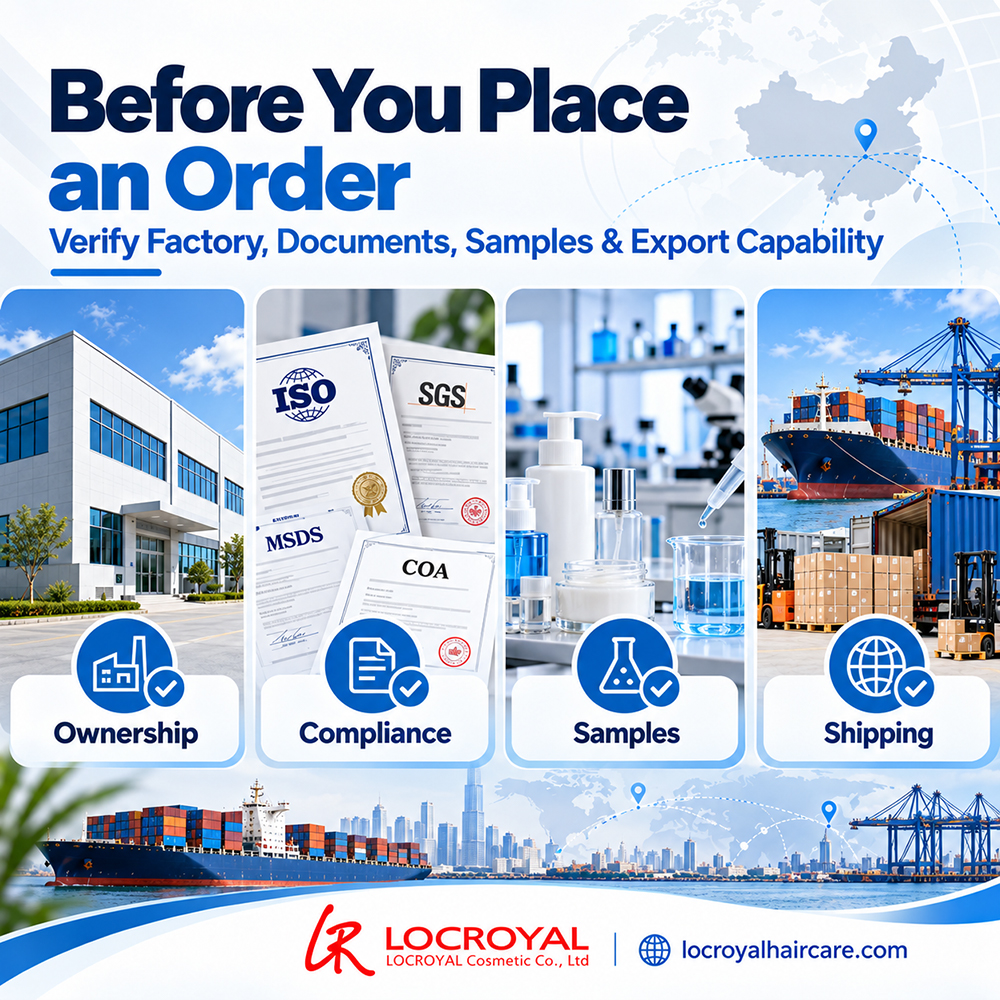
Choosing the right supplier is one of the most important decisions when building a hair care brand. A manufacturer may have a professional website, attractive prices, and a large product catalog, but these factors alone do not prove that you are dealing with a genuine manufacturer.
If you are looking for a hair care manufacturer in China, proper verification can help reduce risks related to product quality, documentation, production capacity, and delivery. The goal is to confirm that the manufacturer has the facilities, experience, quality systems, and production capabilities required to manufacture your products consistently.
Before placing an order, do not rely only on product photos or statements from a sales representative. Ask questions, request documents, inspect the factory, review samples, and compare the manufacturer’s claims with available evidence.
Why Verifying a Hair Care Manufacturer Matters
Manufacturer verification is especially important for OEM and private-label hair care projects.
Factory vs. Trading Company
Some companies that present themselves as manufacturers may actually be trading companies that arrange production through third-party factories. Working with a trading company is not automatically a problem, but buyers should understand who will actually manufacture their products.
Ask for the manufacturer’s legal company name, factory address, and information about the relationship between the company and the production facility.
Production Capability
A supplier needs to have sufficient production capacity for your expected order volume. A factory may produce excellent samples but still lack the equipment, production lines, or capacity needed for larger orders.
Quality Consistency
Your customers judge your brand by the consistency of the products they receive. A reliable manufacturer should have appropriate production equipment, quality-control procedures, batch management, and testing systems.
Long-Term Cooperation
Factory verification is not only about completing your first order. You should also consider whether the manufacturer can support future product development, larger production volumes, packaging changes, documentation, and export requirements.
Check Whether the Manufacturer Owns a Real Factory
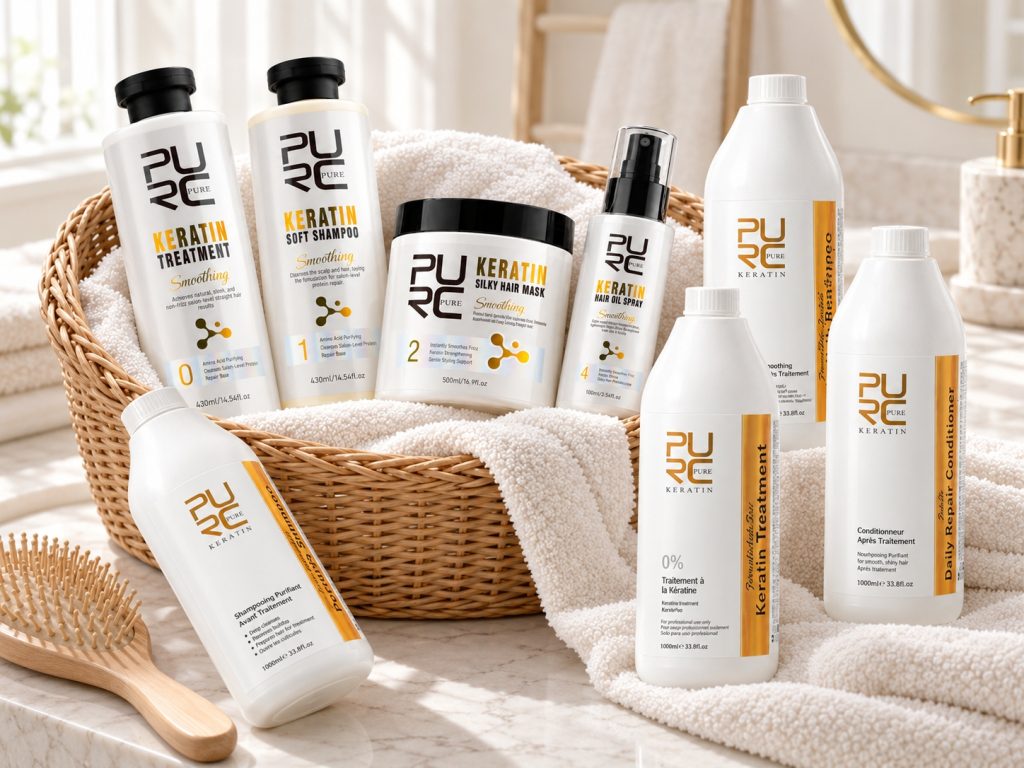
If a supplier claims to operate a self-owned factory, ask for evidence supporting that claim.
Start by checking the company’s legal information, including:
- Registered company name
- Business registration
- Registered address
- Factory address
- Legal representative
- Business scope
- Relationship between the office and factory
The company’s marketing name may be different from its registered legal name, so identify the exact legal entity you will sign the manufacturing agreement with.
Next, request the complete factory address and compare it with business documents, certificates, factory photographs, and other available records.
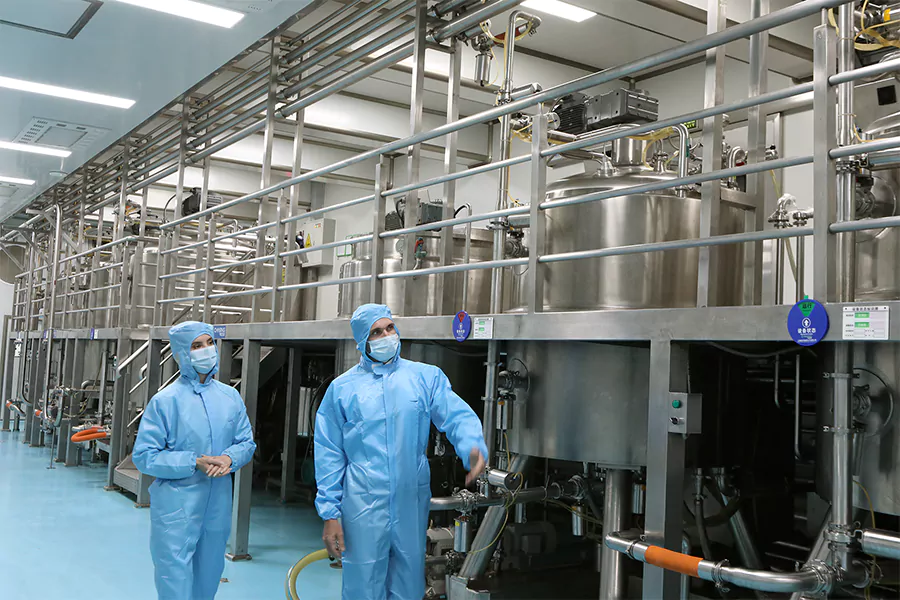
A live video factory tour can provide additional evidence. Ask the supplier to show the production workshop, raw-material storage, mixing equipment, filling lines, packaging areas, laboratory, warehouse, and quality-control areas.
During the tour, ask:
- How many production lines are available?
- Where are raw materials stored?
- How are production batches identified?
- Where does product testing take place?
- How are finished products stored?
- Which equipment is used for your product?
A video tour is not a substitute for an independent cosmetic factory audit, but it is a useful first step for comparing the supplier’s claims with the facility you actually see.
Evaluate Manufacturing Capacity and Production Equipment
A professional hair care manufacturer should have equipment suitable for the products you plan to manufacture. Shampoos, conditioners, hair masks, serums, oils, and styling products can have different processing and filling requirements.
When evaluating a factory, ask about mixing tanks, emulsification equipment, filling machines, packaging systems, and batch-coding equipment.
For example, LocRoyal’s published manufacturing information describes a 50,000㎡ self-owned production base in Foshan, Guangdong, China. The company also provides information indicating 23 production lines, more than 30 automated machines, 150 tons of daily production capacity, and a 100,000-level dust-free workshop.
These figures should be treated as manufacturer-provided information and checked against the facilities and documentation relevant to your order.
The important question is not simply whether a factory has modern machinery. The more useful question is whether its equipment and production capacity are appropriate for your specific product, order volume, quality requirements, and delivery schedule.
Review R&D and Product Development Capabilities
Production is only one part of choosing a hair care manufacturer. R&D capability is particularly important if you need customized formulas or product development support.
Ask whether the manufacturer has an in-house laboratory and R&D team. You should understand how the company develops formulas, creates samples, tests products, and manages product changes.
During verification, check:
- Laboratory facilities
- Formula-development capabilities
- Sample-development process
- Product testing capability
- Experience with similar hair care products
- Support for formula or specification changes
LocRoyal states that it provides OEM/ODM and custom formulation services and has an in-house R&D system. Buyers should still ask how the development process works and what laboratory and testing resources are available.
A capable R&D system can be important when you need changes to texture, fragrance, ingredients, product performance, or packaging requirements.
Check Quality Certifications and Compliance Documents
Quality documents are another important part of hair care manufacturer verification.
Depending on the products and target market, ask for current copies of relevant documents, which may include:
- ISO 22716/GMP-related certificates
- GMPC-related documentation
- COA documents
- MSDS/SDS files
- Product testing reports
- Other applicable regulatory documents
When reviewing a certificate, check the:
- Certificate holder
- Legal company name
- Factory address
- Certificate scope
- Issue date
- Expiration date
- Certification body
Do not assume that the existence of a certificate automatically proves that every product or process meets your requirements. The certificate should correspond to the correct legal entity, facility, scope, and validity period.
Regulatory requirements also differ between countries. For example, U.S. cosmetic requirements are different from requirements in other markets. Ask the manufacturer which documents are available for your destination market and determine whether additional compliance work is required.
Review Production Process and Quality Control System
Certificates are only one part of quality management. You should also understand how quality is controlled during actual production.
Ask the manufacturer how it manages raw materials, production batches, in-process checks, finished products, and product testing.
Important areas to review include:
- Raw-material inspection and storage
- Formula and batch control
- Production-process monitoring
- Filling and packaging inspection
- Finished-product testing
- Batch identification and traceability
- Finished-goods storage
- Quality documentation
Ask how the manufacturer ensures that mass production matches the approved formula and sample.
For customized products, this is especially important. The manufacturer should have a clear process for controlling changes and maintaining consistency between approved samples and subsequent production batches.
If you are placing a large order, an independent cosmetic factory audit can provide additional verification of the manufacturer’s production and quality systems.
Verify Export Experience and Global Cooperation
A manufacturer may be capable of producing a good product but have limited experience with international customers or destination-market requirements.
Ask about the manufacturer’s export markets and previous experience supplying similar hair care products internationally.
Useful questions include:
- Which countries or markets does the manufacturer export to?
- Can it provide commercial invoices and packing lists?
- Can it provide required product documents?
- Does it support international labeling requirements?
- Can it assist with regulatory documentation?
- Does it have experience with your target market?
- Can it support international logistics arrangements?
LocRoyal states that it supports international customers with manufacturing, documentation, and regulatory-related services.
Export experience can be useful because cosmetic requirements vary between countries. Do not rely only on a supplier’s general statement that it exports internationally. Confirm that the manufacturer understands the requirements relevant to your specific market and product.
Request Samples Before Mass Production
Never select a hair care manufacturer based only on photographs, catalogs, or price quotations.
Request product samples before placing a large production order. Samples allow you to evaluate whether the product meets your expectations before committing to mass production.
Check:
- Formula
- Texture
- Fragrance
- Color
- Product performance
- Filling quality
- Packaging compatibility
- Product consistency
- Leakage
- Overall appearance
If you are developing a customized product, keep the approved sample as a reference for mass production.
You should also ask the manufacturer how the final production batch will be controlled against the approved formula and specifications.
Sample approval provides another practical way to verify a manufacturer’s capabilities before making a significant financial commitment.
Hair Care Manufacturer Verification Checklist
| Check | What to Verify |
| Factory | Ownership and factory address |
| Equipment | Production equipment and automation |
| Production capability | Production lines and capacity |
| R&D | Laboratory and development capabilities |
| Formula | Formula-development process |
| QC | Quality-control and testing system |
| Documents | Certifications and compliance documents |
| Samples | Formula, texture, fragrance, and performance |
| Packaging | Filling and packaging compatibility |
| Export | Market and international experience |
| Logistics | Documentation and shipment support |
Conclusion
Verifying a hair care manufacturer in China should involve more than checking a website or comparing prices. A reliable verification process combines company information, factory inspection, production capabilities, R&D resources, quality documents, manufacturing controls, samples, and export experience.
If you are considering a hair care manufacturer in China for OEM or private-label production, use multiple sources of evidence before placing an order. Check what the manufacturer claims, ask for supporting documents, inspect the facility when possible, and make sure the supplier can meet the requirements of your specific product and target market.
This approach can help you make a more informed supplier decision and establish a stronger foundation for long-term cooperation. If you are looking for a hair care manufacturer in China for OEM or private-label production, contact LocRoyal to learn more about its manufacturing capabilities and services.