When parents clean baby bottles, feeding utensils, and tableware, they need a product that removes milk and food residues without complicating a daily routine. For baby care brands, this creates an opportunity to offer a practical cleanser with a clear product concept.
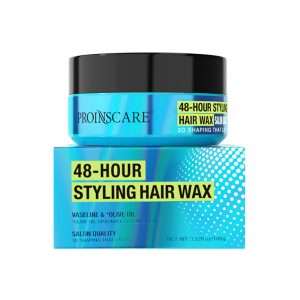
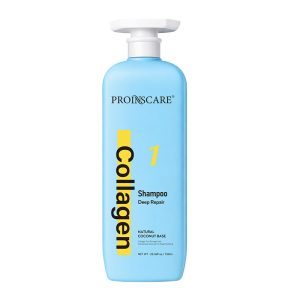
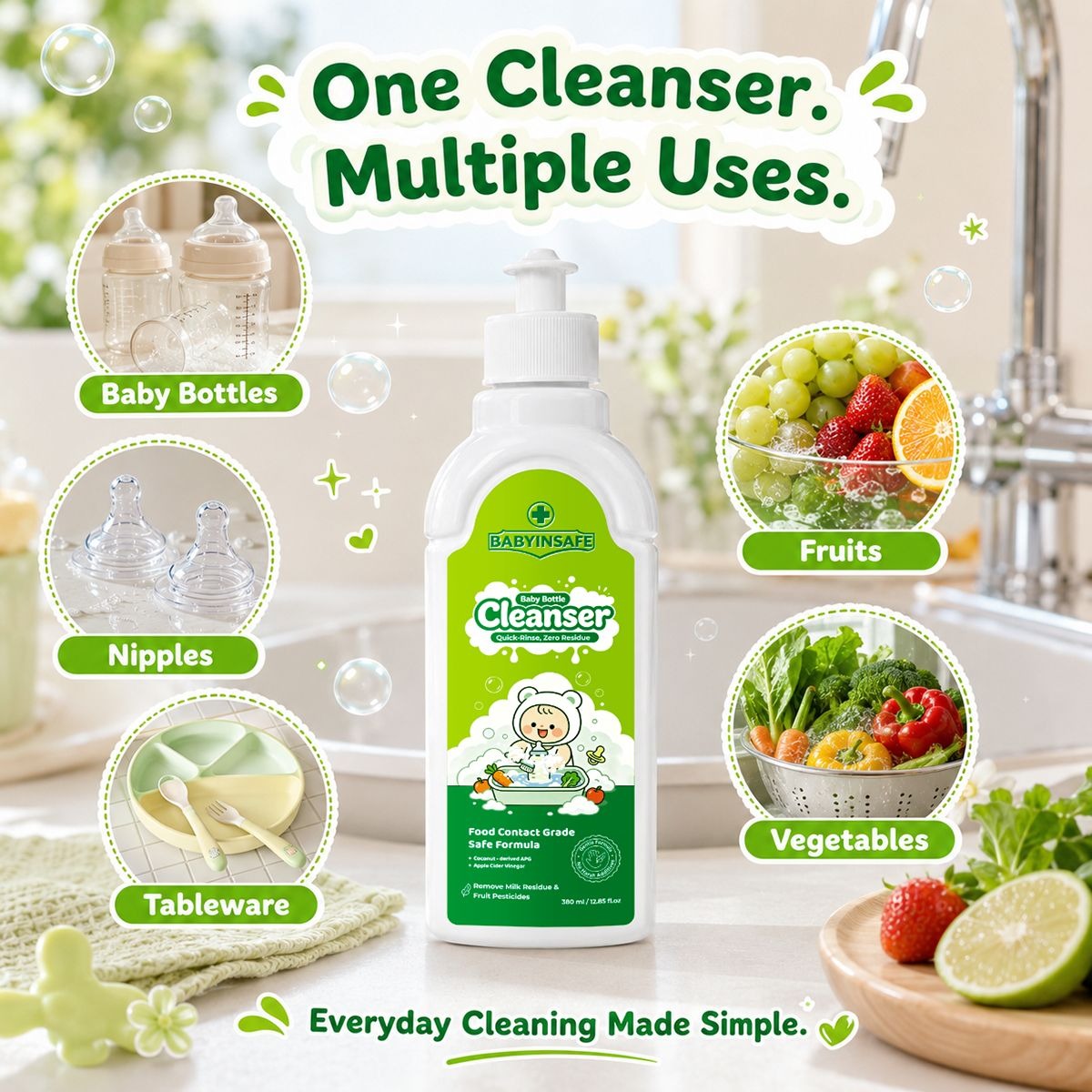
LocRoyal’s Baby Bottle Cleanser is positioned around gentle cleansing, quick rinsing, and everyday convenience. According to the manufacturer’s product information, the 380 ml gel formula features coconut-derived APG plant-based surfactant, apple cider vinegar extract, and mild pH-balanced botanical ingredients. It is described as free from added fragrance, preservatives, and alcohol under the PROINSCARE brand.
For companies developing private label baby care products, this formula can be a starting point for OEM/ODM development and customized packaging.
Why Choose a Gentle Baby Bottle Cleanser?
A baby bottle cleanser needs to help remove residues from feeding products while keeping the cleaning process simple. Bottles, nipples, cups, and utensils can have narrow areas where milk residue remains, so effective cleansing and thorough rinsing are important.
LocRoyal positions this product around a gentle formula with no harsh additives and quick-rinse performance. The manufacturer also describes it as a food-contact-grade-safe formula. For private label baby care brands, this straightforward positioning can support practical benefits such as residue removal, easy rinsing, and a mild formula concept.
A Formula Based on Coconut-Derived APG
The key cleansing ingredient highlighted by LocRoyal is coconut-derived APG, or alkyl polyglucoside. The formula also contains apple cider vinegar extract and mild botanical ingredients.
For an OEM/ODM cosmetics factory, ingredient selection is only one part of product development. The complete formula requires appropriate evaluation for performance, stability, packaging compatibility, and applicable market requirements. This is particularly important for private label baby care products, where claims must be clear and supportable. A plant-derived ingredient should not automatically be described as risk-free or suitable for every person; finished-product evaluation remains essential.
Quick-Rinse Performance for Everyday Cleaning
Parents often use baby cleansing products every day, which makes convenience an important selling point. The Baby Bottle Cleanser is described by LocRoyal as quick-rinsing with zero visible residue. Product instructions recommend adding an appropriate amount to water, soaking bottles or tableware for several minutes, and then rinsing thoroughly with clean water.
For baby care product manufacturing, the bottle, dispensing system, formula texture, and directions should work together. Clear usage instructions also help customers understand how much product to use, how to clean items, and how to rinse properly.
Multi-Use Positioning for Baby Care
According to LocRoyal’s product page, the cleanser is intended for baby bottles, tableware, fruits, and vegetables, and is described as helping remove milk residue and fruit pesticides. This multi-use concept can appeal to private label baby care brands seeking more than a single-purpose bottle cleanser.
However, brands should carefully review any produce-cleaning claim before using it in advertising or packaging. The final claim should be reviewed for the destination market’s regulatory requirements. Professional baby care product manufacturing includes formula, claims, labeling, instructions, testing, and compliance—not just production.
OEM and ODM for Private Label Baby Care Products
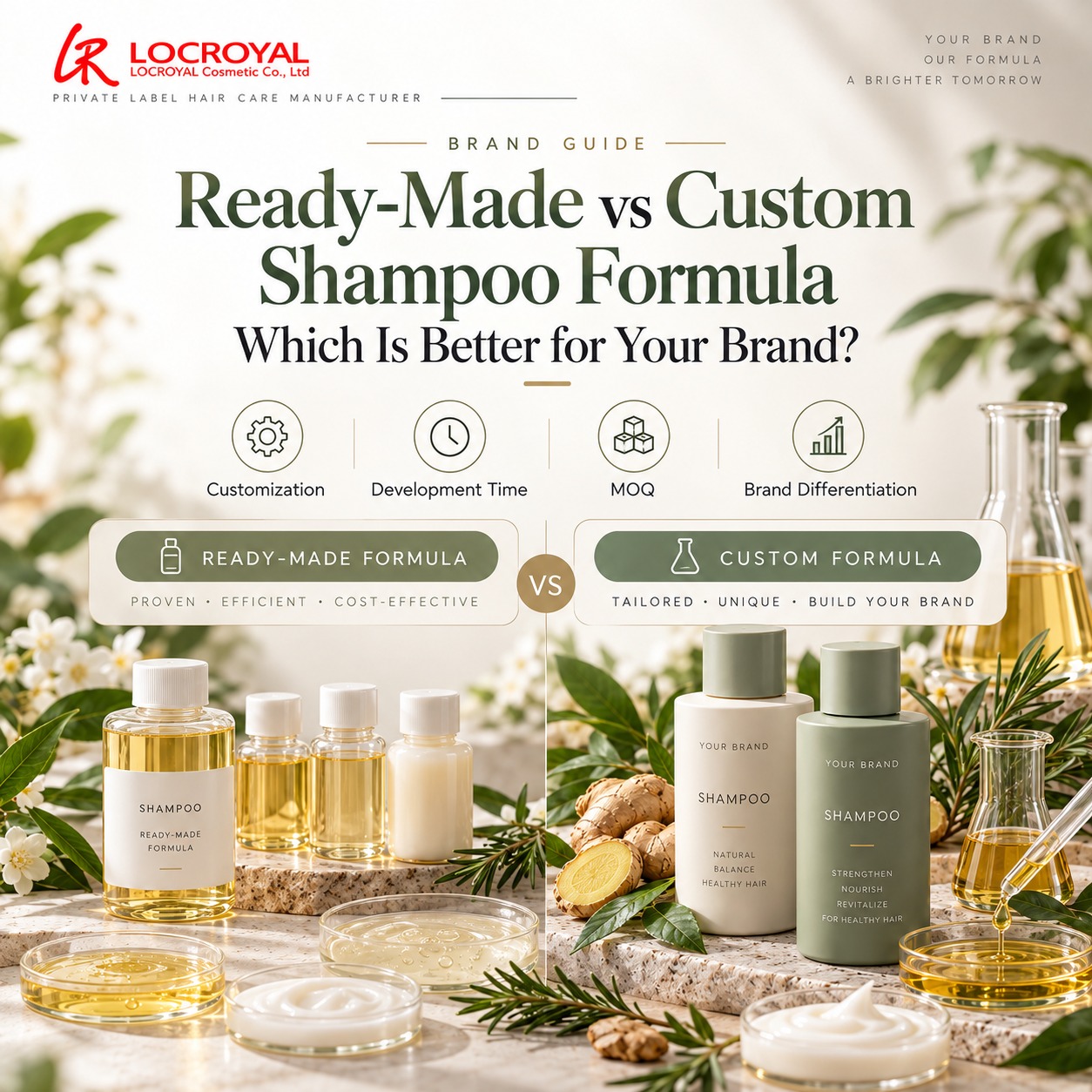
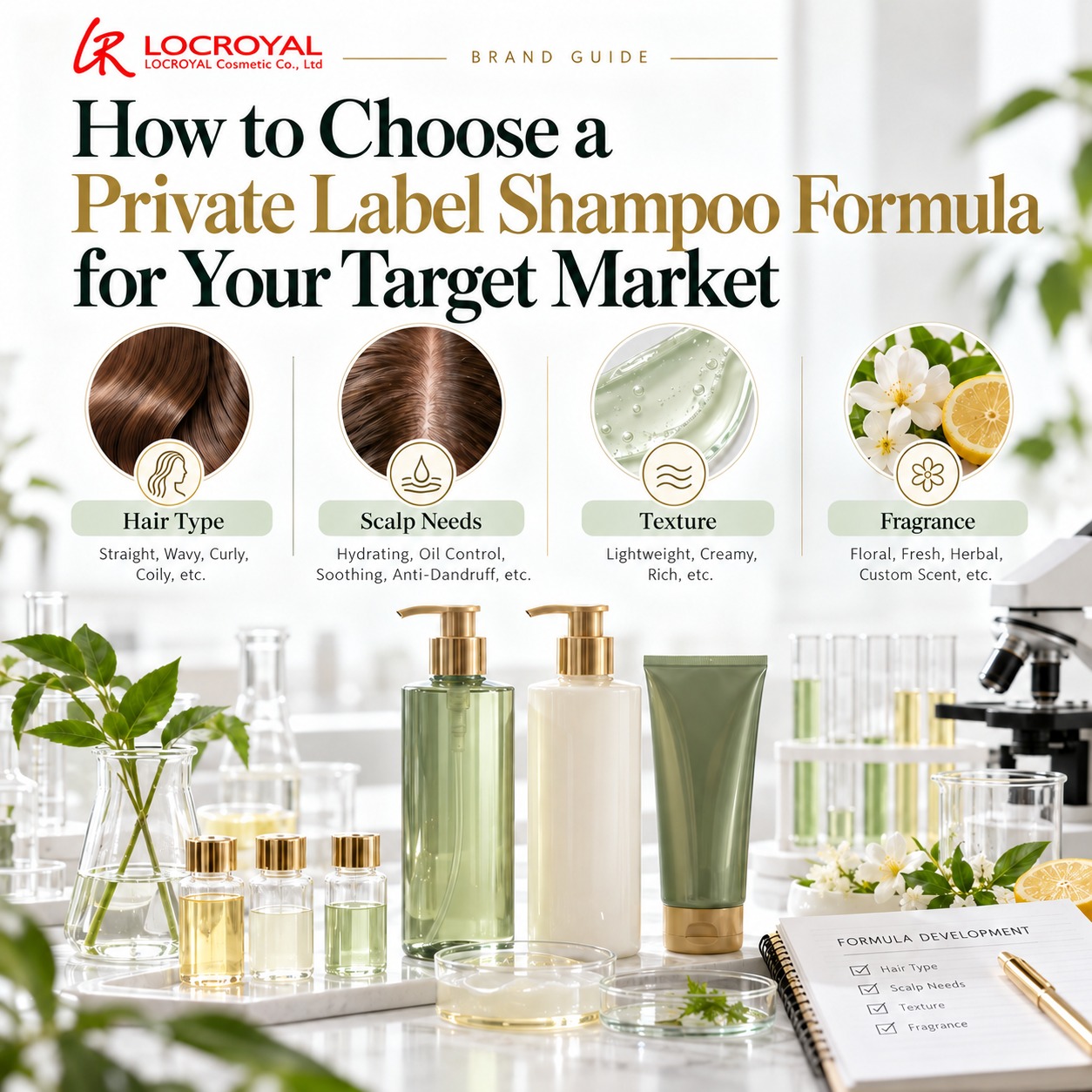
Companies may need a different bottle, packaging design, formula profile, or product presentation. This is where an experienced OEM/ODM cosmetics factory can provide value. LocRoyal states that it provides OEM, ODM, private label, and wholesale services, including customization of formulas, scent, color, features, functions, and packaging.
The existing Baby Bottle Cleanser can serve as a development starting point, followed by discussions about the desired formula and package. Significant changes to ingredients, pH, preservation, packaging, or specifications should be evaluated because they can affect performance and stability.
Why Manufacturing Capability Matters
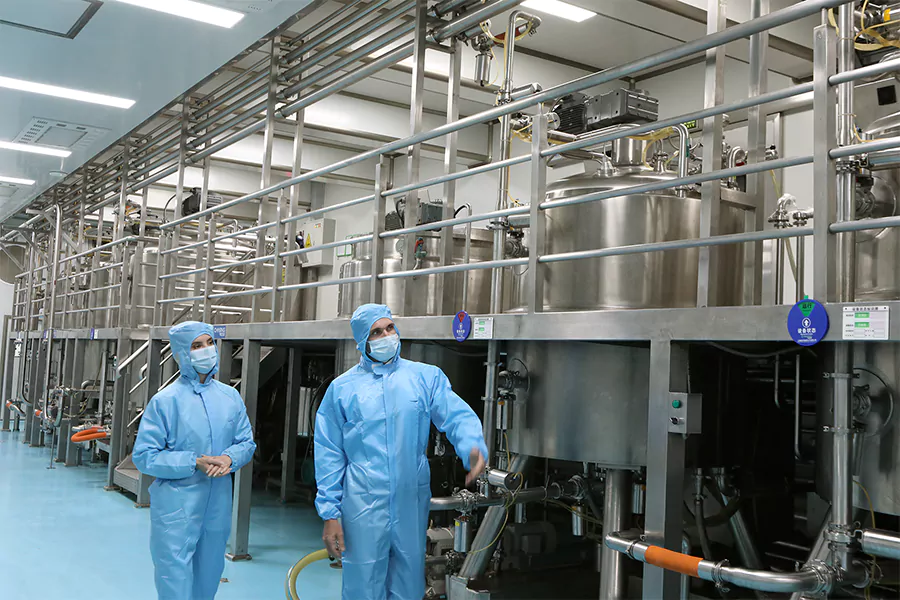
LocRoyal states that it has more than 15 years of cosmetics manufacturing experience, 12 fully automatic production lines, a reported daily emulsification capacity of 150 tons, and Class 100,000 dust-free workshops. It also states that quality control covers raw materials, packaging, production processes, and finished products.
The company states that it follows ISO 22716 and GMPC standards and lists documents including GMPC, ISO 22716:2007, FDA, BPOM, CPNP, SGS, MSDS, COA, CFS, and LOA. Certification scope should always be checked for the specific product and target market; these credentials are not automatic approval for every product claim.
BonnieCo Group: An Integrated Manufacturing Platform
The wider Foshan BonnieCo Biotechnology Co., Ltd. describes itself as a smart beauty manufacturing group with a self-owned production base in Foshan. Its business divisions include Guangzhou LocRoyal Cosmetics Co., Ltd. for hair care OEM and self-owned brands, and Guangzhou BonnieCo Cosmetics Co., Ltd. for skin care and color cosmetics OEM.
The group reports 23 production lines, more than 30 automated systems, a daily emulsification capacity of 150 tons, Class 100,000 dust-free workshops, a team of senior R&D professionals, and a formulation library. This broader infrastructure can provide useful context for companies developing several personal-care categories.
From Product Concept to Private Label Launch
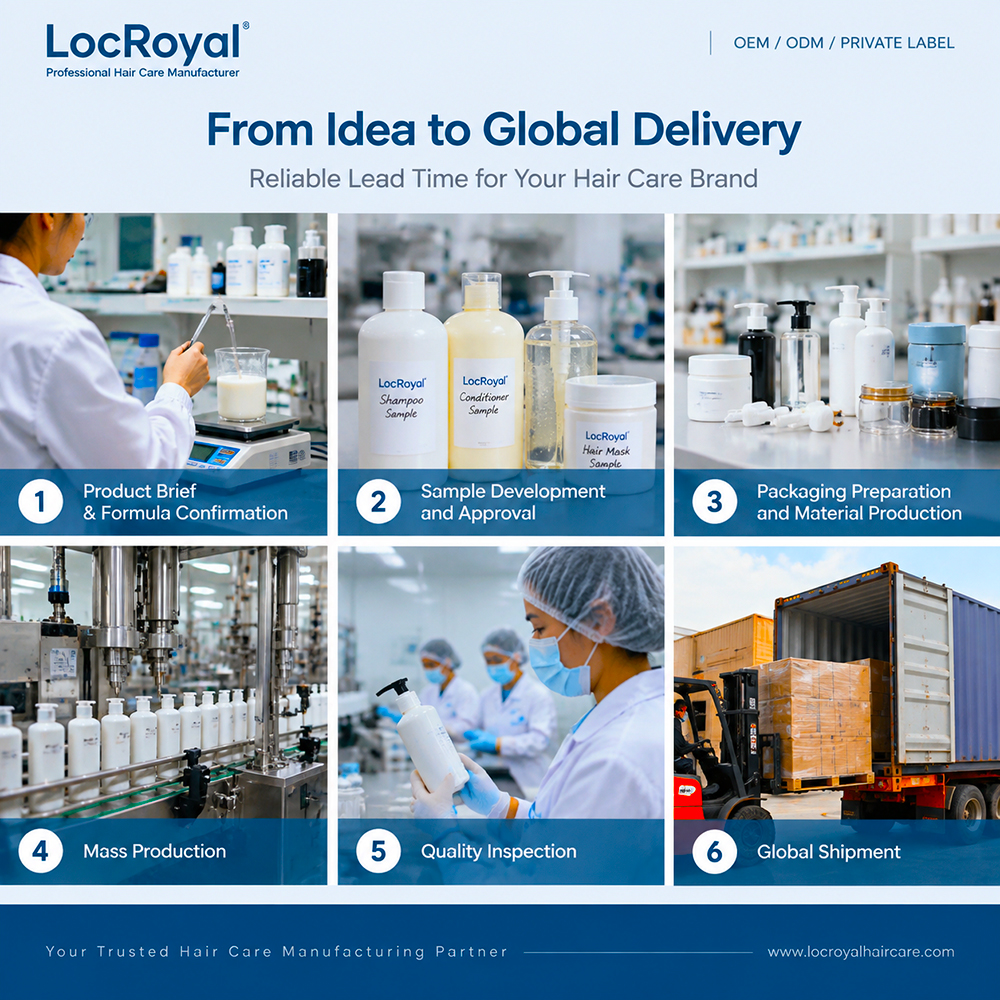
A systematic project starts with a clear product brief: target market, positioning, package size, claims, and sales channel. Next, review the base formula with your baby care products manufacturer to determine whether it fits the target market or needs customization. Then develop packaging and branding, evaluate samples, confirm compliance, and proceed to production only after formula, packaging, quality, and commercial specifications are approved.
- Define the product: identify customers, market, price position, packaging requirements, and concept.
- Develop the formula: review the existing cleanser and requested changes with the R&D team.
- Create samples: evaluate texture, cleaning performance, rinsing behavior, packaging, and user experience.
- Confirm compliance: review claims, labeling, documentation, testing, and market requirements.
- Start production: manufacture after all specifications are approved.
A Practical Choice for Modern Baby Care Brands
The Baby Bottle Cleanser offers a clear concept: gentle cleansing, coconut-derived APG, apple cider vinegar extract, quick rinsing, and convenient use for baby bottles and tableware. For brands, the opportunity can extend to a broader private label baby care portfolio supported by customized development and professional manufacturing.
Frequently Asked Questions
What is a Baby Bottle Cleanser?
It is a cleansing product designed to help remove milk and food residues from baby bottles, tableware, and feeding utensils. LocRoyal’s product is supplied as a 380 ml gel.
What are the key ingredients?
The formula highlights coconut-derived APG and apple cider vinegar extract, combined with mild, pH-balanced botanical ingredients.
Can I customize the product and packaging?
LocRoyal lists OEM, ODM, and private label services, including formula and packaging customization. Each requested change should be evaluated for performance, stability, and market compliance.
Can it be used on fruits and vegetables?
The product page lists fruits and vegetables as suitable uses, but this claim should be verified for the relevant commercial market before use in advertising or packaging.
Conclusion
A successful baby care product starts with a clear consumer need and continues through careful formulation, testing, packaging, manufacturing, and market compliance. LocRoyal’s Baby Bottle Cleanser provides a practical starting point for brands looking for a gentle cleansing concept and OEM/ODM customization. Contact LocRoyal to discuss samples, formula and packaging requirements, and a private label baby care project.
-1-300x300.jpg)