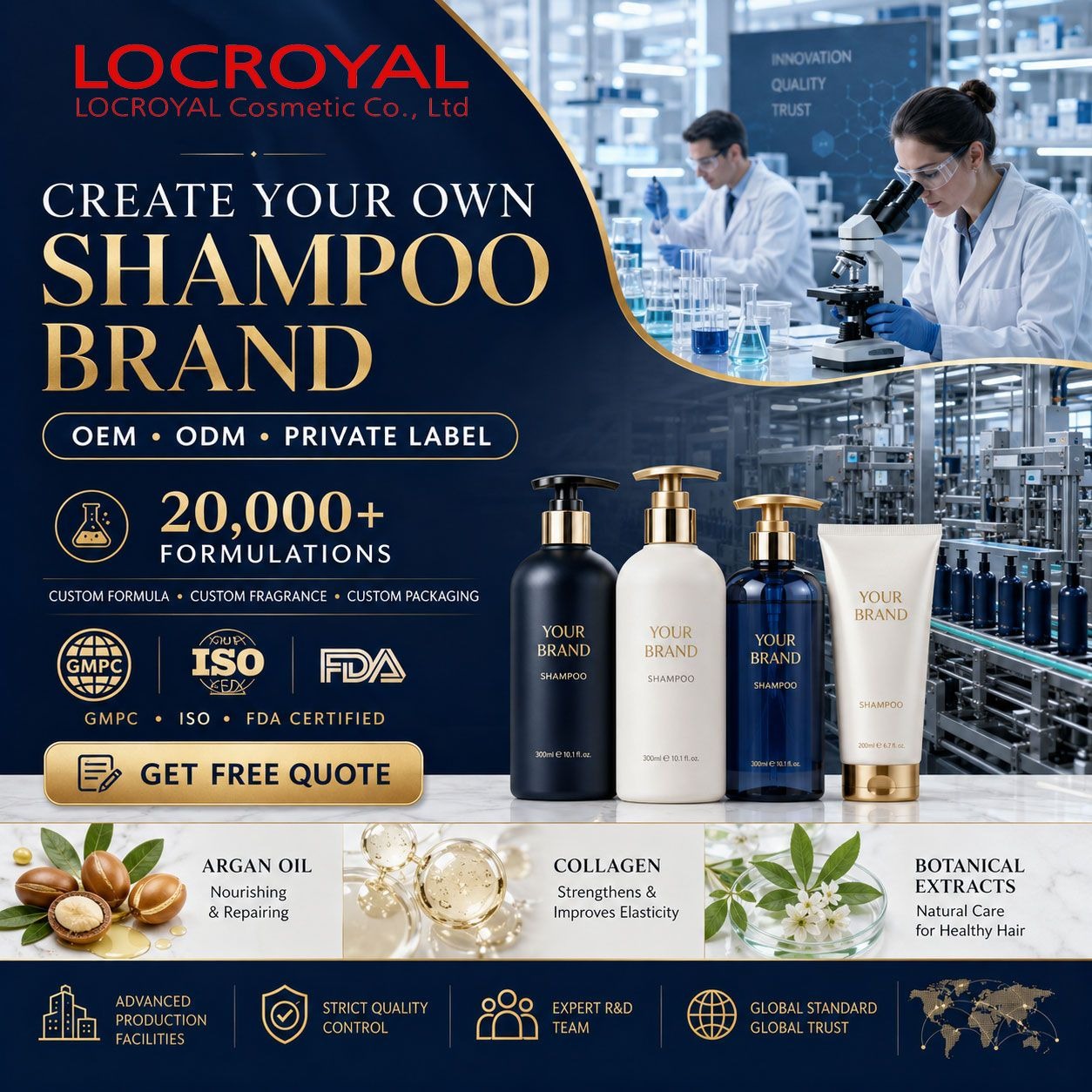
The global hair care market is more crowded than ever. Consumers are savvier, shelves are stocked, and a great logo isn’t enough to stand out – it has to be a product that really works. You can either be a beauty business starting up or a brand that is already established, but you’re expanding your range either way; this is the most critical decision you will make.
This guide explains all you need to know about OEM shampoo and ODM shampoo manufacturing and why you should choose a factory with the right capabilities as the base of a great hair care brand.
What are OEM Shampoo and ODM Shampoo Services?
Before going into the strategy, it is essential to grasp the difference between the two fundamental manufacturing models:
OEM (Original Equipment Manufacturer) Shampoo Services involve the factory making products according to formulas, designs, or specifications provided by you. It’s a concept you bring, a production capability they bring. OEM is a preferred product delivery method for brands that have invested in R&D and desire control of ingredients and formulations.
The model is turned over for ODM (Original Design Manufacturer) shampoo services. Here, the manufacturer creates the formula, packaging, and specifications, and you license/brand it as your own. ODM is perfect for brands that are looking to introduce products quickly, try a new market segment, or want to add products to the catalog without the time and cost of working on a product themselves.
Most serious private label shampoo partnerships combine both a manufacturer with decent ODM capabilities and the ability to incorporate OEM customizations, offering the best of both worlds: speed to market and the ability to make it different.
Why the Right Shampoo Factory Partner Matters More Than You Think
A number of brands don’t realize the importance of the brand’s trajectory set by the manufacturer. Your factory choice determines your product’s quality limit, your capacity to expand, the certifications you can include on your label, and your overall cost structure. This is what to consider.
1. Depth of Formulation Library
A good hair shampoo manufacturer is not just the one that provides a few basic products. They have an extensive, continually growing library created by an expert R&D team. When it comes to your hair, you have real choices like moisturizing shampoos for dry hair, volumizing products for fine hair, keratin-infused products, scalp-care products, color-protecting products, sulfate-free naturals, and a lot more.
LocRoyal Hair Care is an experienced, professional manufacturer of hair care products bringing more than 15 years of experience to the industry, and has over 10,000 hair care formulations, all made with high content naturally derived and certified organic ingredients.
LocRoyal, which operates under the Foshan BonnieCo Biotechnology Co., Ltd. group, is one of three specialized divisions sharing a common 50,000㎡ self-owned production base, thus providing the scale to ensure that brands of all sizes are not compromised.
To a brand, that depth is more than just not compromising; it’s about staying true to your concept. Once you are able to identify a formula that lines up with your vision, then you can tweak it to match your exact positioning.
2. Natural and Premium Ingredients
Today’s consumers read labels. Clean beauty is not a trend; it’s the baseline expectation in most markets. The ingredients you’re using should be carefully chosen, focusing on those that are plant-derived and naturally occurring, and effective without the addition of unnecessary synthetic substances.
A lot of the best shampoo and conditioner companies use botanical science as well as cosmetic chemistry, for instance, argan oil for shine and frizz control, biotin for hair growth positioning, keratin for mending and smoothness, tea tree for scalp wellness, and so on. Your packaging and marketing ingredient story begins in your factory.
3. Certifications and Quality Standards
Compliance is a must, particularly if you are selling in different markets. A reputable hair care manufacturer will have internationally recognized certifications to assure quality management systems as well as product safety.
Check for ISO, GMPC (Good Manufacturing Practice for Cosmetics), FDA registration (for the US market), BPOM (for the Indonesian market), and CPNP (for access to the EU market). LocRoyal has all these, and their products comply with the most demanding expectations of North America, Southeast Asia, and Europe, a very important factor for brands looking to expand their distribution abroad.
4. True End-to-End Customization
The term customization is used interchangeably in manufacturing. It should actually mean: You can design the product, packaging, branding, and marketing materials from one partner.
A full-service OEM shampoo partner will be able to handle formula development, bottle/cap selection, label design, box design, and even marketing pictures. LocRoyal features an in-house designer team to help with product packaging, marketing pictures, and video production. This saves them from the time and expense of having to work with more than one vendor and agency.
5. Scalable Capacity at Competitive Pricing
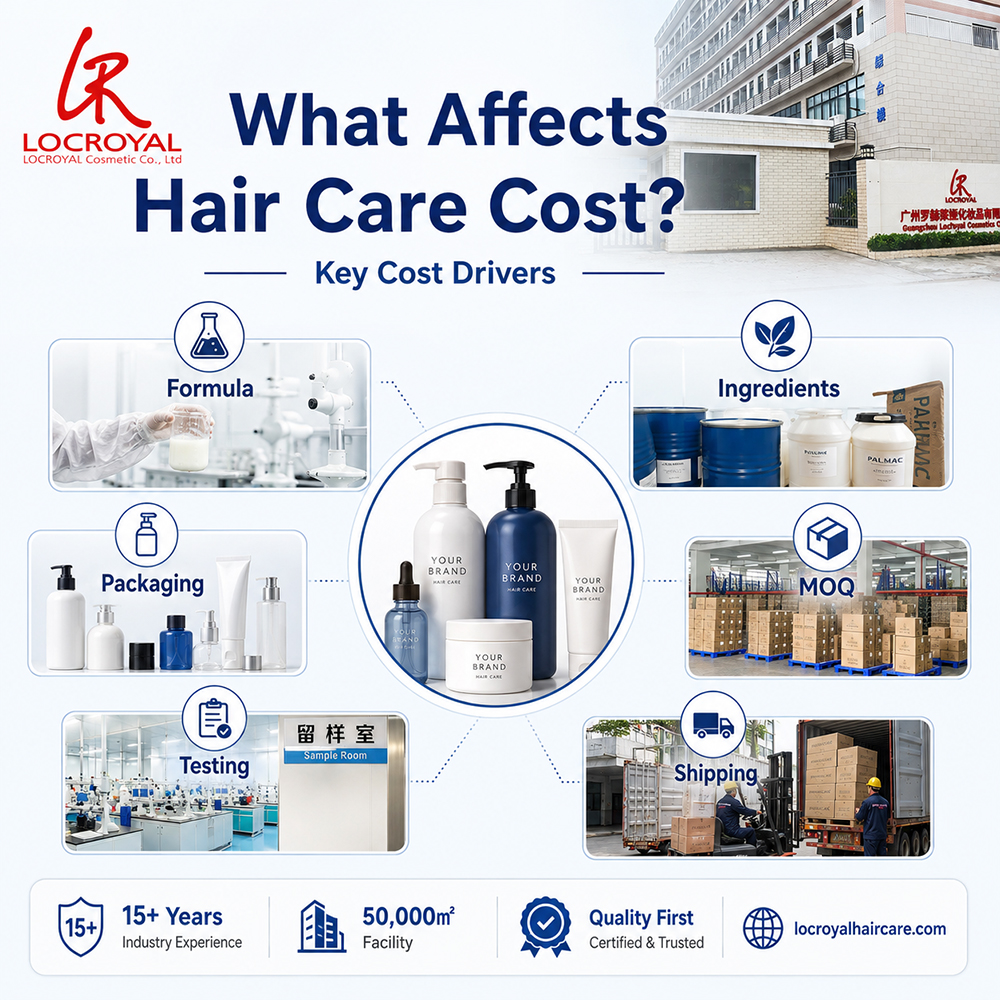
The scale of the factory is extremely important. The manufacturer that can do your first 500 units, but not a ramp-up to 50,000 units if your brand gains momentum, is a liability. Likewise, a factory that has far-reaching overhead costs and makes a minimum purchase too expensive isn’t for early-stage brands.
This is where BonnieCo Group’s infrastructure plays an important role. They have a self-owned production base of 50,000㎡ in Foshan, one of China’s leading cosmetics manufacturing cities, which can expand production according to the growth of your brand.
It offers multiple categories of brands the opportunity to obtain hair care products (Guangzhou LocRoyal Cosmetics Co., Ltd.) and skin care products, color cosmetics (Guangzhou BonnieCo Cosmetics Co., Ltd.), and choose a single reliable group instead of switching to different manufacturing factories.
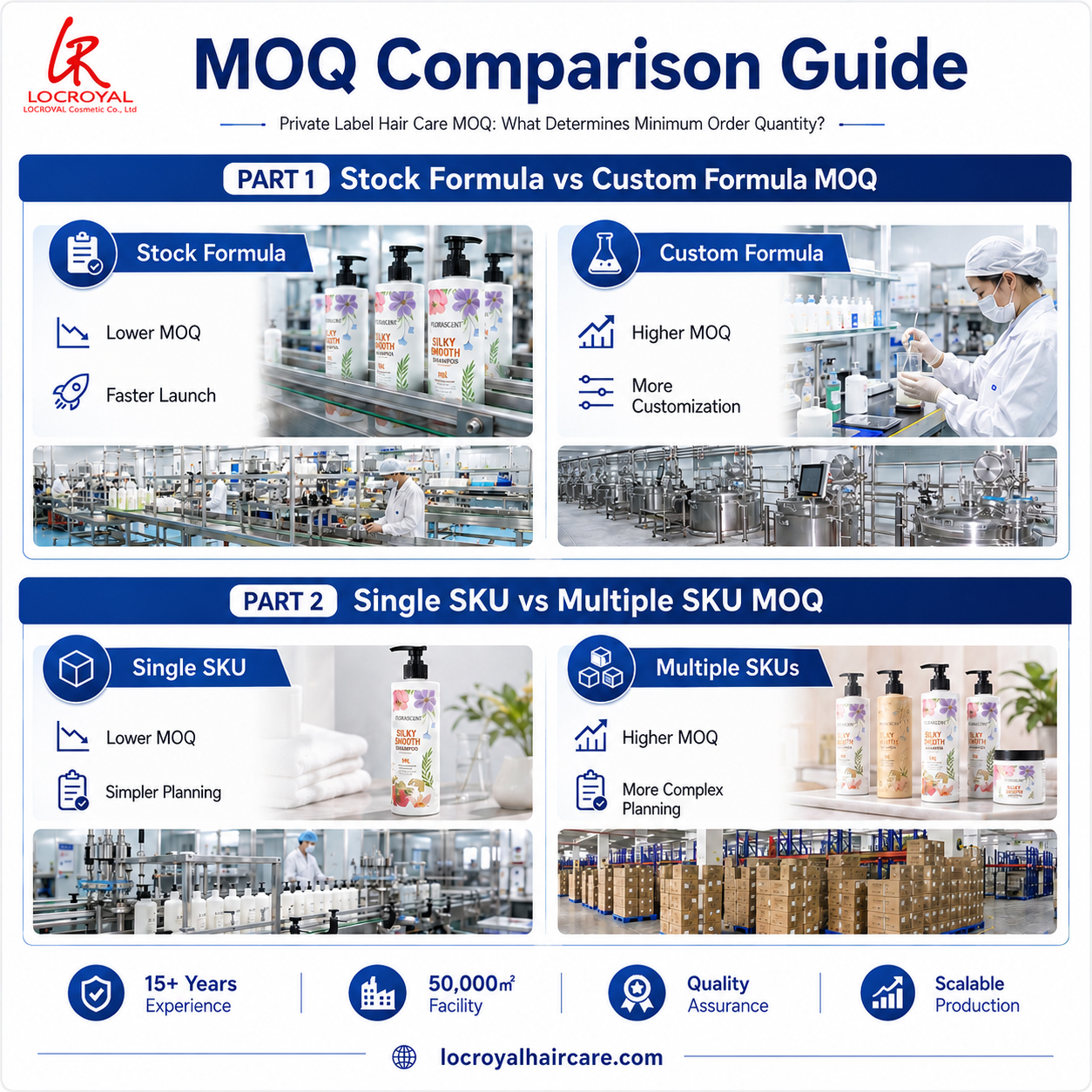
Flexible MOQ (Minimum Order Quantities) and pricing that support growth are the best shampoo factory partners. Their cost structure should be based on a full quality management system, not inflated revenues.

The OEM/ODM Production Process: What to Expect
Knowing what to expect in a typical workflow allows you to set timelines and effectively communicate expectations with your manufacturer.
Step 1: Briefing and Concept Alignment: You tell the audience your brand vision, your targeted customer, your key claims (moisturizing, strengthening, volumizing, etc.), and any ingredient preferences or restrictions. It is used by your manufacturer to determine candidate formulations or to start a custom development brief.
Step 2: Formula Selection/Development: In an ODM solution, you review the existing formulas in the factory’s formula library and choose the best match. OEM: R&D is used to create or tweak a formula to meet your requirements. Either way, this stage will conclude with a test formula.
Step 3: Sample Production and Testing: Your evaluation is on the lab samples produced by the factory. Texture, fragrance, action, and compatibility are evaluated. The formula undergoes a series of revisions until it is satisfactory to you.
Step 4: Packaging Design and Selection Bottle: design (pump, flip-cap, squeeze), size, bottle material, label, and outer carton are determined. A reliable factory will advise you about the packaging options that are most appropriate for your formula’s consistency and/or intended customer base.
Step 5: Regulatory Documentation: Your manufacturer creates the safety documentation, ingredient declarations, and other required paperwork needed for your markets (FDA, EU CPNP, BPOM, etc.).
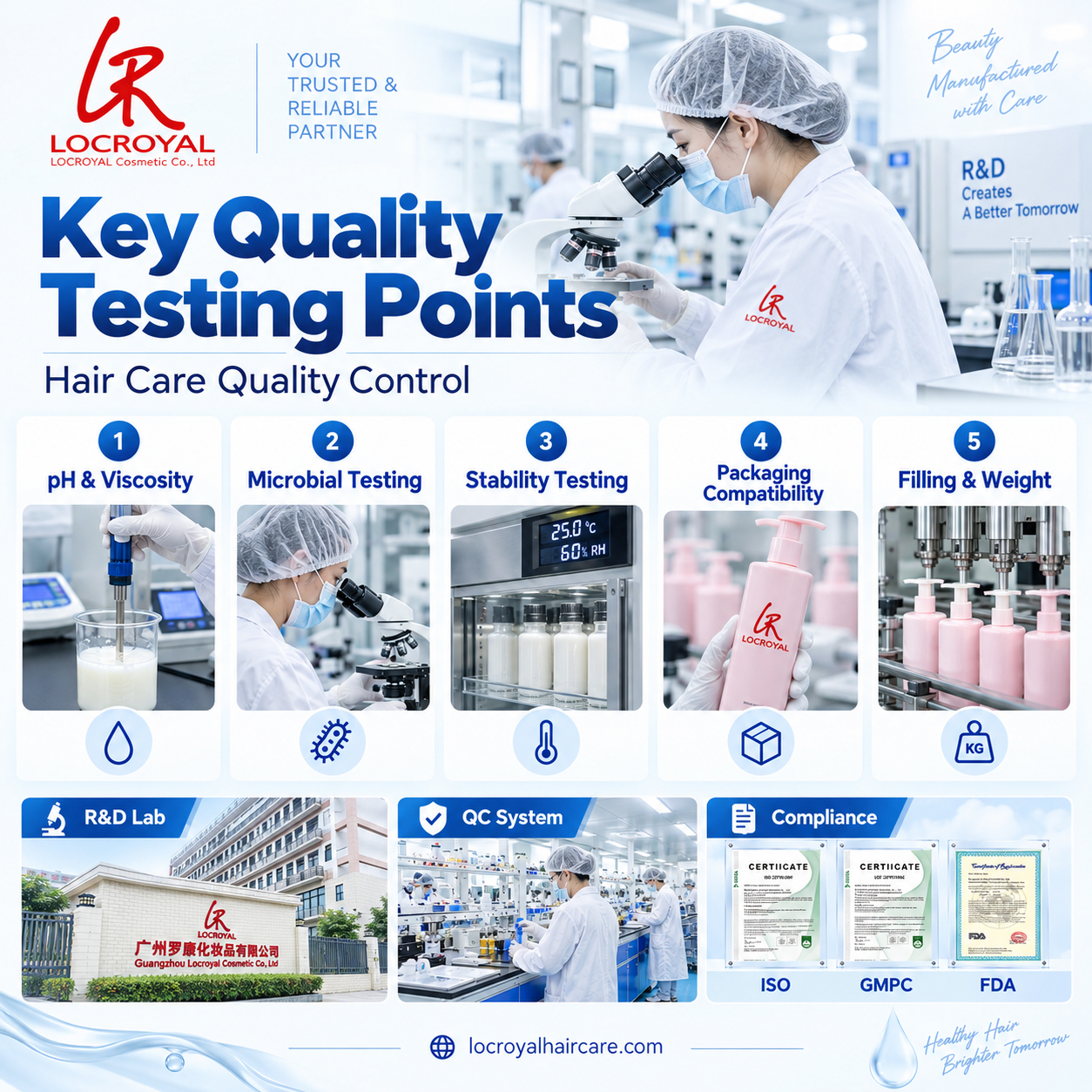
Step 6: Mass Production and Quality Control: There are strict QC procedures in place for production runs. Good factories will check for stability, microbial safety, and formula consistency during the entire production run.
Step 7: Delivery: Manufactured goods are packed and delivered as per your logistics arrangement. The factory can deal with export documentation.
Key Shampoo Categories Worth Considering for Private Label
Since a robust ODM library exists, you don’t have to limit yourself to standard shampoos. The following are some of the best opportunities for private-label hair care products right now:
Moisturizing and Hydrating Shampoos: Designed for consumers with damaged hair or chemically treated hair, or for consumers who prefer to use a shampoo that hydrates the hair shaft. Formulas containing argan oil, shea butter, or hyaluronic acid work well for everyone.
Keratin Treatment Shampoos: These formulas are used alongside keratin smoothing treatments and are suitable for anyone dealing with frizz or heat-damaged hair.
Scalp Care Shampoos: The subcategory of scalp health is a growth sector. The anti-dandruff, sebum balancing and soothing formulations that contain salicylic acid, zinc pyrithione and tea tree oil are responding to an increasing consumer interest.
Natural and Organic Shampoos: Shampoos free from sulfates, parabens, and plant-free. Organic ingredients certification provides extra shelf credibility.
Hair Growth Shampoos: Biotin, caffeine, and peptides are added to the formulas to tackle the huge consumer concern about hair thinning and density. Great marketing claim potential with supporting clinical ingredients.
Colour Protection Shampoos: Must-haves for salon brands or for salon clients with coloured-treated hair. Soft surfactant systems that keep colours vibrant.

How to Choose the Right OEM/ODM Shampoo Partner
The following is a practical checklist to consider when reviewing the various potential manufacturers:
- Do they have verifiable certifications (ISO, GMPC, FDA, BPOM, CPNP)?
- How large is their active formulation library? Can you access it before committing?
- What is their minimum order quantity, and how does pricing scale?
- Do they offer in-house packaging design and branding support?
- What is their average lead time from sample approval to delivery?
- Can they supply documentation for your target markets?
- Do they have experience with brands in your distribution channel (e-commerce, professional salon, retail)?
- Do they operate their own production facility or rely on subcontractors?
The manufacturer who is able to confidently answer all of these with evidence is a manufacturer to be considered seriously.
Why LocRoyal and BonnieCo Group Are Trusted Partners for Global Beauty Brands
LocRoyal and BonnieCo Group are trusted partners for global beauty brands because of their expertise in the sector.LocRoyal and BonnieCo Group are trusted partners for global beauty brands due to their experience in the sector.
LocRoyal Hair Care is a part of the hair care business of Foshan BonnieCo Biotechnology Co., Ltd. (BonnieCo Group), a vertically integrated smart beauty manufacturing group that has a history of 15 years in the industry with three specialized operating divisions, namely:
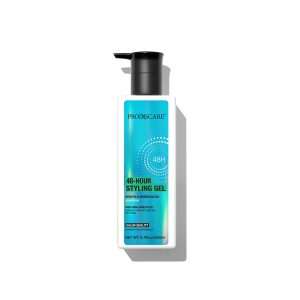
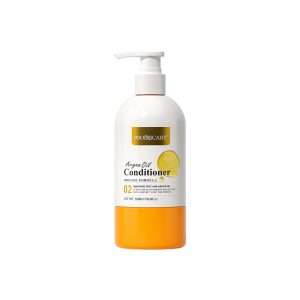
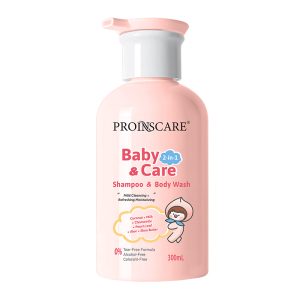
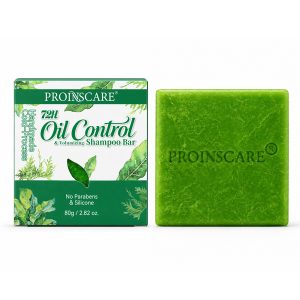
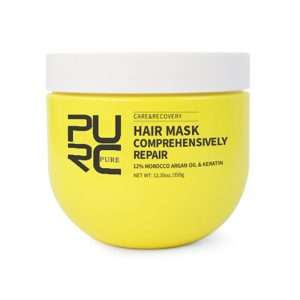
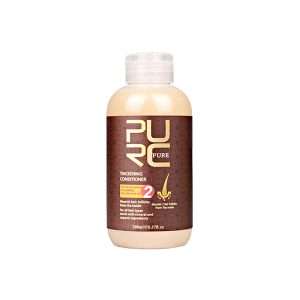
The factory’s core business is hair care OEM/ODM production, as well as its own brands, such as PROINSCARE and PURC, which demonstrates that the factory is not just producing for others but has also successfully built up its own consumer brands. This first-hand brand-building experience directly influences the way an OEM/ODM business is guided.
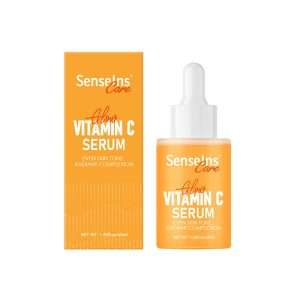
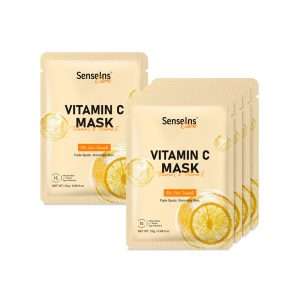
Guangzhou BonnieCo Cosmetics Co., Ltd. provides skin care and colour cosmetics OEM/ODM, and has self-owned brands such as SenseInsCare and Jellyprim. If your brand is seeking to expand beyond hair care, such as serums, moisturizers, and color cosmetics, BonnieCo offers the same level of quality manufacturing facilities in one package.
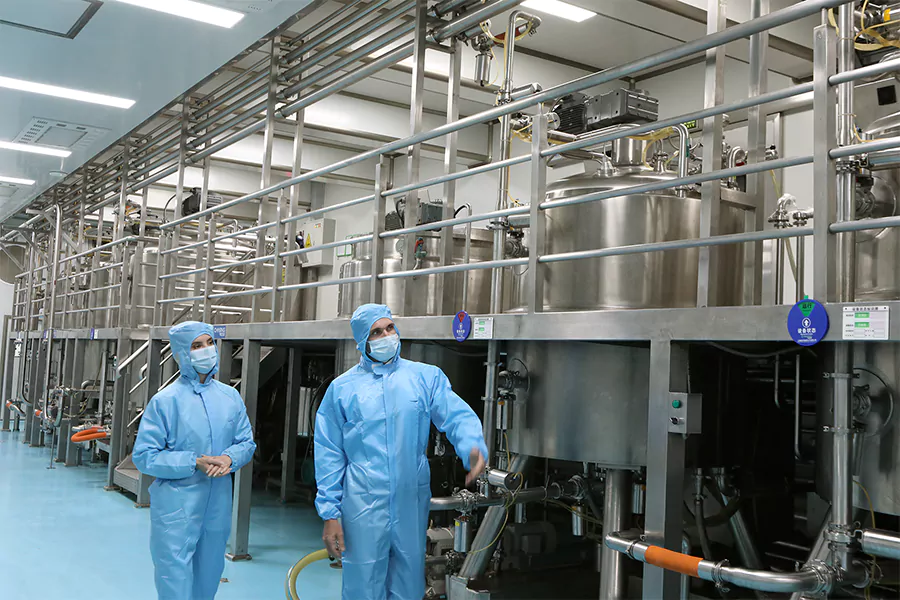
Both divisions are supported by the Foshan production base, which is a self-owned base with a capacity of 50,000㎡. Not a network of third-party contractors. It’s a one facility, owned, purpose-built factory with the capacity, equipment, and quality control to manage larger production runs with the attention to detail required by private label brands.
In all three divisions, the group has ISO, GMPC, FDA, BPOM, and CPNP certifications that allow clients to sell compliantly throughout North America, the EU, Southeast Asia, and more.
From a high-end brand of salon shampoos to a clean beauty hair care brand, to a skin care brand, to a full multi-category beauty brand, you can have your entire line of products manufactured by a single trusted partner with BonnieCo Group’s integrated ecosystem.
Conclusion
The foundation of a successful hair care brand is a good choice of the manufacturing partner. Whether it’s through customization options, high-quality ingredients, or global certifications, a trustworthy OEM shampoo and ODM shampoo manufacturer provides your brand with the groundwork necessary to thrive and stay competitive.
Looking to get your next bestseller off the ground? Collaborate with LocRoyal Hair Care and enjoy more than 10,000 combinations for you to choose from, a 50,000㎡ self-owned production base, expert R&D support, and complete private label solutions. Contact LocRoyal now to get a free quote, to discuss what you need, and to take your hair care brand to market with confidence.