Introduction
The big error most brands in the booming beauty sector make is applying the Hair Care Formula across all sales channels. Although this can make OEM Hair Care production a bit easier, it can frequently result in a poor user experience, low repeat purchases, and negative reviews.
Why is this so? The hair care market is not homogeneous. It is segmented into two key segments, namely, professional salon channels and mass e-commerce retail channels. They all have varying expectations, usage patterns, and performance levels. Consequently, the rationale of hair care manufacturers will have to alter as well.
In the case of brands that deal with reputable manufacturers such as LocRoyal Haircare, it is necessary to comprehend the difference in the hair care formula OEM. Good product development is not merely a matter of ingredients; it is a matter of the correct formula for the correct audience.
Then what is really the difference between salon and retail formulas? We can begin with the basis: market positioning and user needs.
Core Difference: Different Market Positioning and User Needs
Before getting into the ingredients, one should know to whom the product is directed. This is the most important aspect that determines any Hair Care Formula in Salon Hair Care and in retail markets.
Salon Channel Products
Salon products can be used by professionals, usually by trained stylists. These products will provide visible results in the short term. Clients who go to salons normally have severe hair issues, including chemical damage, either through coloring, perming, or bleaching.
Due to this, Salon Hair Care is performance-oriented. The formulae are constructed to fix, flatten, and change hair within one sitting. This is to produce highly concentrated and intensive formulas that provide instant results in OEM Hair Care.
E-commerce Retail Products
Retail products cater to a much wider market. A majority of consumers are seeking daily upkeep as opposed to radical change. They desire something that they can use easily, that can be applied multiple times, and that feels comfortable on the hair.
This sets a much different trend in the production of hair care. The development of Retail Hair Care Formulas is based on balance- the products to be developed should be effective but also lightweight, non-greasy, and should be used in the long term.
This distinct difference underscores the significance of the OEM hair care formula difference. Even a good quality product will not succeed in the market without modifying the formula to these various needs.

Formula Ingredient Differences
After defining the target audience, the next step for OEM Hair Care is to make changes to the formula itself. Here lie the actual technical differences in hair care manufacturing.
Concentration of Active Ingredients
Ingredient concentration is one of the most significant factors in the hair care formula difference between OEMs.
Salon products contain increased amounts of active ingredients like proteins, oils, and conditioning agents. These focused formulae enable fast and observable enhancements in broken hair.
Retail formulas, on the other hand, are intended to be used frequently. This implies that it should be well-regulated so as to prevent accumulation, weightiness, or annoyance. A Hair Care Formula is a balanced formula to make sure that the product is gentle yet provides the same results over time.
Texture and Sensory Experience
Another significant difference between Salon Hair Care and retail products is texture.
Salon recipes tend to be thick and creamy. They produce a coating effect that immediately flattens out the hair and makes it look better. This is best suited to professional treatments that need quick outcomes.
Retail items, in contrast, are concerned with a lighter feel. Consumers are fond of those formulas that are easy to absorb, rinse, and leave no residue. In OEM Hair Care, this balance is to be reached with the help of the selection of ingredients and the correct formulation.
Stability and Shelf Life
Stability is a very crucial issue in the manufacture of hair care, and more so in retail products.
Salon products are usually consumed in a short time, and under controlled conditions, hence stability in the long-term is not a serious issue. Retail goods, on the other hand, should be stable during transportation, storage, and long usage.
It implies that the Hair Care Formula should contain the proper stabilizers and preservatives to ensure performance over time. This is another important ingredient of the hair care formula, a different OEM.
Fragrance and Consumer Perception
The power of fragrance in the perception of a product is enormous.
Salon products tend to make use of stronger, more luxurious smells to make a premium experience. The smell becomes a part of the service, which makes the perception more enhanced.
Retail products need a new approach. The smell should be attractive to a large group of people, and it should be pleasant to use on a daily basis. In OEM Hair Care, choosing the proper fragrance is equally crucial as the choice of the proper active ingredients.
Cost and Pricing Differences
Another huge difference between Salon Hair Care and retail products is cost. The variations between the Hair Care Formula design also have direct effects on the pricing strategies.
Salon products are typically placed as high-end products. They employ better-quality raw materials and sophisticated formulations, which add to production costs. Nevertheless, customers would be ready to pay higher amounts as they would demand the professional level of results.
Retail products work in a competitive environment. The sensitivity to prices is greater, and the brands should be value-conscious. This is a cost that should be carefully controlled in manufacturing hair care products without compromising the quality of the product.
The difference in hair care formula OEM here is not only technical, but also strategic. Brands have to make early decisions on whether to compete in the high-performance salon market or the high-volume retail market.
Packaging and Implementation Logic Differences
Packaging is a forgotten factor, yet it is important in determining the success of any OEM Hair Care product.
Salon products are tailored towards the professional setting. The packaging is typically plain, utilitarian, and larger. It is more concerned with convenience to the stylists than with appearance.
Retail products, on the other hand, are dependent on packaging to appeal to the customers. Product images provide the first impression in e-commerce. This implies that the design should be attractive, contemporary, and must match the trends.
In the production of hair care, packaging should also be in tandem with the Hair Care Formula. As an illustration, a salon formula that is thicker might need pump bottles, whereas a lighter retail formula might be best in squeeze tubes or spray cans.
This is another instance of formula and packaging congruity, the hair care formula difference between OEM.
What Can LocRoyal Do for Brands?
It may be difficult to negotiate the discrepancies between retail products and Salon Hair Care. This is where cooperation with such a professional manufacturer as LocRoyal Haircare is needed.
LocRoyal focuses on tailored OEM Hair Care solutions, assisting brands to formulate formulas that are appropriate to their target audience.
They provide custom Hair Care Formula development depending on the target brand, going through a salon or retail channel. This will make sure that every product is created with the appropriate performance-texture-cost ratio.
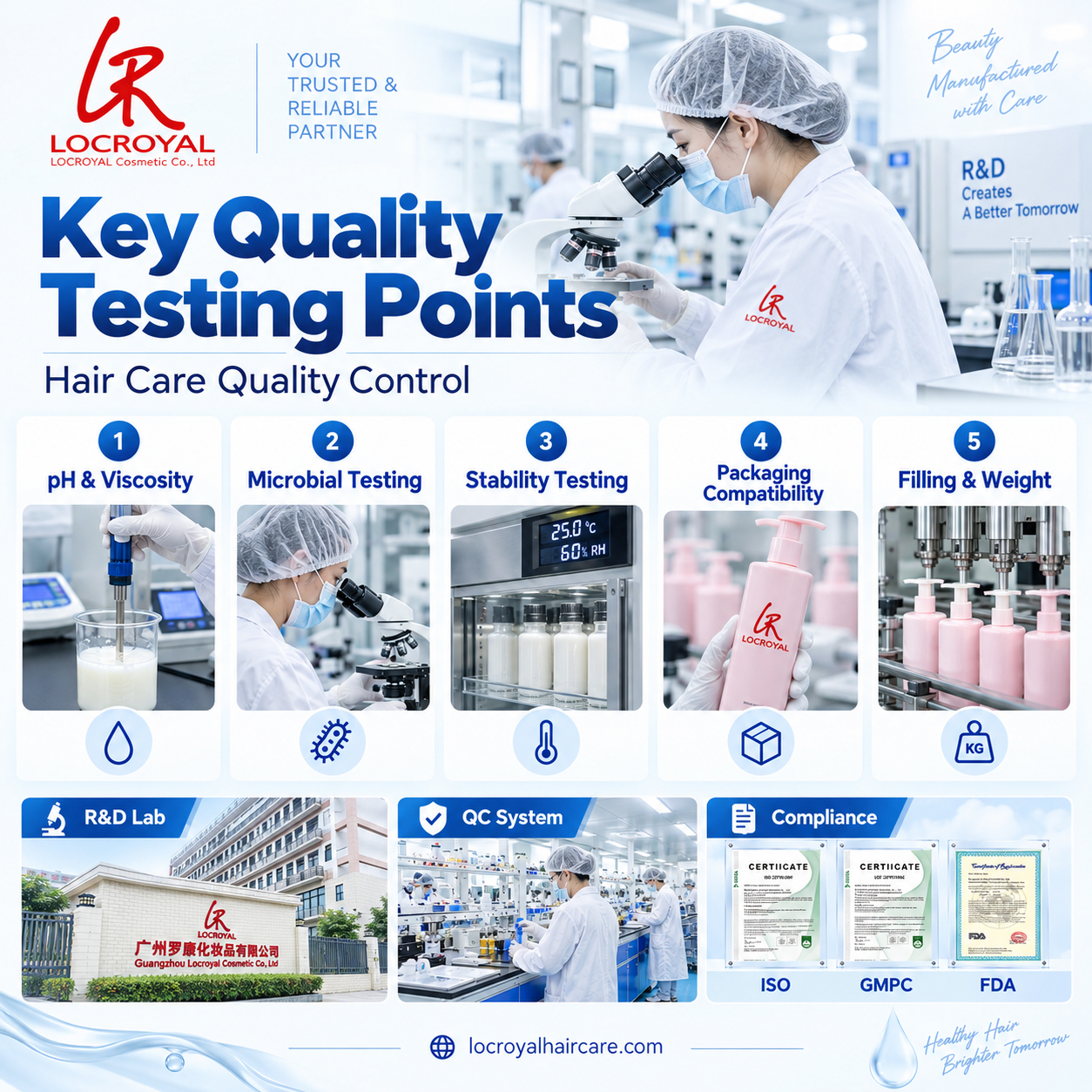
Moreover, their hair care production services include all production phases. They offer a full solution, starting with ingredient selection and stability testing, continuing with packaging design, and compliance documentation.
Problem-solving is one of their strong points. Problems encountered by many brands include excessive formulas that are too heavy, too weak, or even unstable over time. LocRoyal will enable brands to prevent these pitfalls by learning the difference in the hair care formula OEM.
They also offer services outside the manufacturing sector, such as packaging, personalization, and marketing material. This facilitates the easy introduction of effective and competitive products by the brands.
Conclusion
The distinction between Salon Hair Care and retail products extends much further than mere formulation. It embodies two entirely distinct product development, marketing, and user experience strategies.
Salon products are made to provide quick, professional outcomes. The retail products are geared towards comfort, usability, and long-term care. All these variations influence all levels of the Hair Care Formula and hair care production.
No brand can afford to overlook the difference in the hair care formula OEM. An inappropriate formula in the wrong channel may result in poor performance and loss of customers.
An expert OEM Hair Care partner is aware of such differences and develops tailored solutions for every market. In this way, the brands will be able to enhance the performance of their products, customer satisfaction, and long-term success.
Foshan BonnieCo Biotechnology Co., Ltd. (BonnieCo Group) — Self-Owned Factory · Own Brands · Global Certifications · 15 Years of Smart Beauty Manufacturing, We operate three core business divisions:
1.Guangzhou LocRoyal Cosmetics Co., Ltd.: Hair care OEM + self-owned brands including PROINSCARE, PURC
2.Guangzhou BonnieCo Cosmetics Co., Ltd.: Skin care & color cosmetics OEM + self-owned brands including SenseInsCare, Jellyprim
3.A 50,000㎡ self-owned production base in Foshan
FAQs
What is the main distinction between salon and retail hair care formulas?
The key distinction is in the usage and performance. Salon Hair Care is concerned with a high-strength Hair Care Formula that is used as an instant result, whereas the retail formula is used on a day-to-day basis in OEM Hair Care.
What is the significance of the difference in the hair care formula OEM?
Due to the fact that various markets need various formulations. Overlooking the difference in hair care formula OEM may result in ineffective product performance and dissatisfaction among customers.
What does OEM Hair Care do to encourage customization?
OEM Hair Care manufacturers vary ingredients, texture, and packaging depending on the target market of the brand and hair care manufacturing needs.
Do salon formulas work better than the retail formulas?
Yes, the active ingredients of Salon Hair Care formulas are usually more concentrated than those of Hair Care Formula products sold in retail outlets.
What influences the price of hair care production?
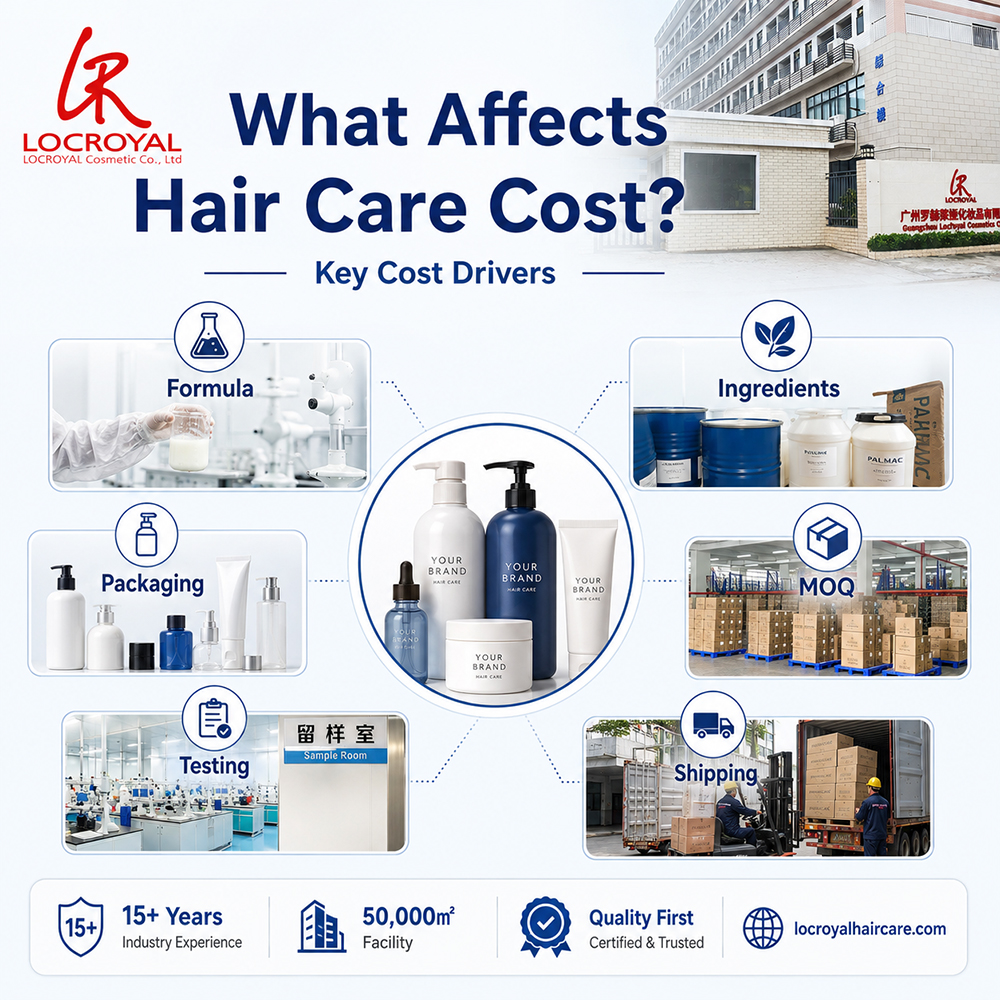
Some of these factors are the quality of ingredients, the complexity of the formula, and the packaging in the production of hair care.
Is it possible to have one manufacturer of salon and retail products?
Yes, there are companies such as LocRoyal Haircare that deal with both OEM Hair Care and Salon Hair Care solutions.
What is the significance of texture in hair care formulas?
Very important. The user experience is influenced by texture, which is one of the main elements of the difference in the hair care formula OEM.
What are the problems with bad OEM Hair Care products?
Issues such as greasiness, instability, and poor performance during the development of the Hair Care Formula are problems.
What is the time required to come up with a custom-made formula?
Depending on the complexity, it may take weeks to develop a tailored Hair Care Formula in OEM Hair Care.
Why select a full-service hair care manufacturing partner?
A full-service provider guarantees uniformity, quality, and efficiency in the production of hair care, both in formulation and packaging.