Introduction
The hair care industry is becoming increasingly competitive worldwide. Packaging or fragrance is no longer the only measure of brands. Nowadays, consumers demand safe, effective, compliant, and consistent products with each batch. That change has put ingredient control as one of the most critical aspects of product development.
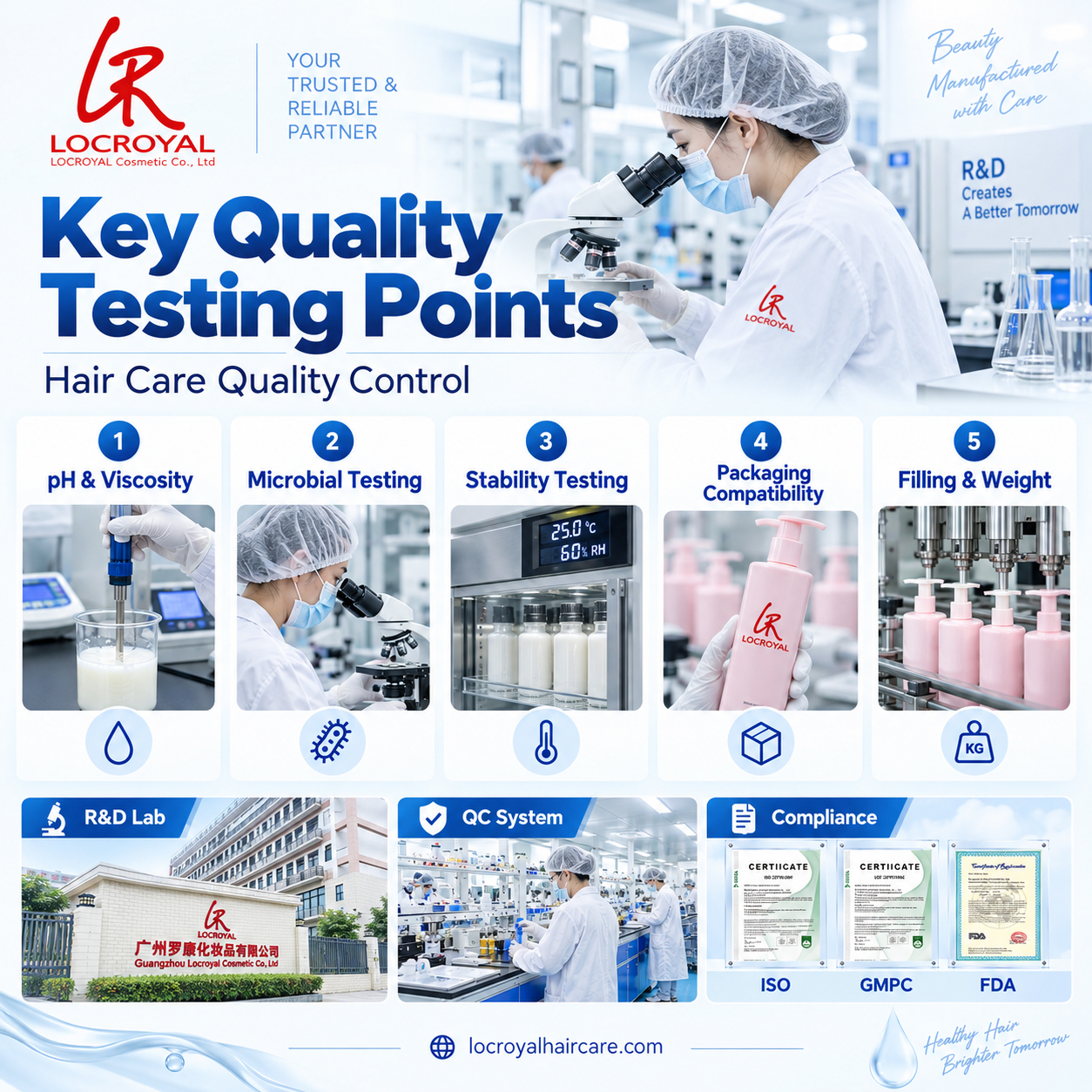
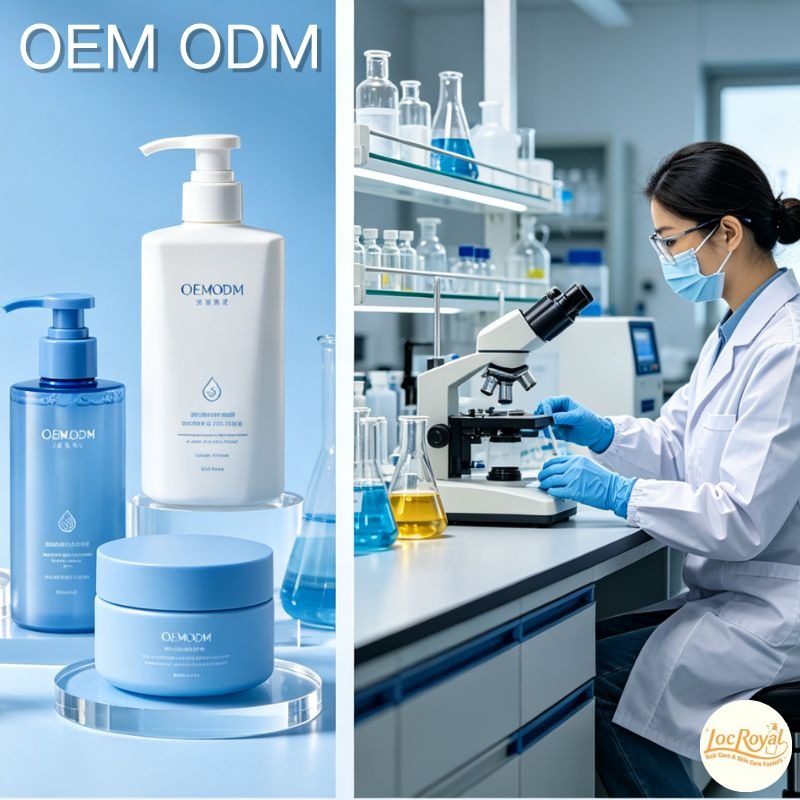
In the case of any brand that collaborates with a Private Label Hair Care Manufacturer, the actual value begins behind the scenes. It starts with supplier screening, formula design, quality testing, and process control. Modern hair care manufacturing requires far more than simply filling bottles; it depends on strong systems for formulation, testing, compliance, and quality control.
It relies on the creation of a system that will be able to promote product safety, brand credibility, and long-term development.
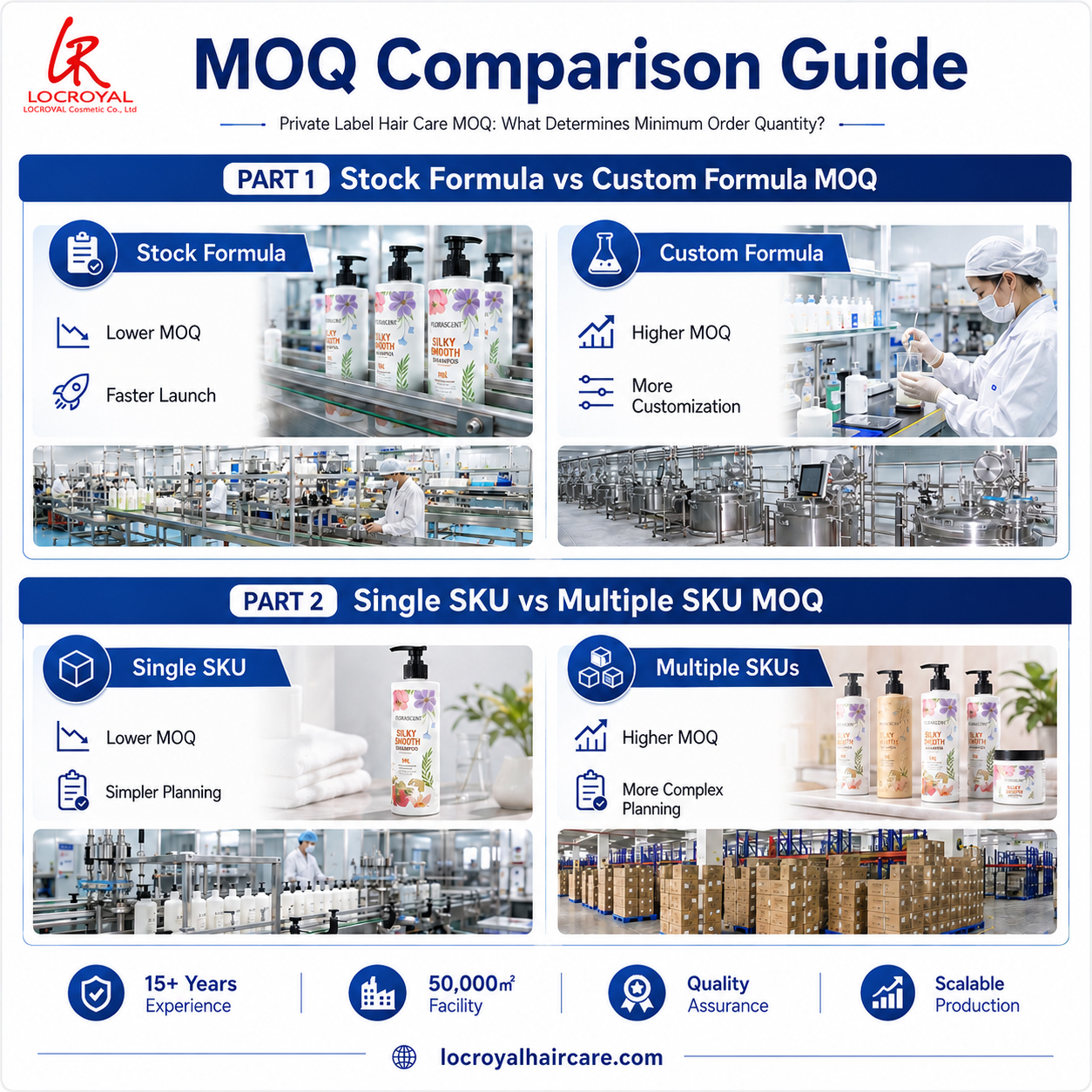
That is why Hair Care Formula Customization is important. An effective OEM/ODM partner must have the capacity to develop formulas that suit a target market, fulfill regulatory requirements, and align the price and positioning of a brand. Meanwhile, powerful Hair Care Raw Material Specifications help to make sure that all formulas begin with traceable, compliant, and suitable materials to be used in actual production.
So, how can a reliable OEM/ODM supplier help brands reduce risk and accelerate product development? And what is a One-Stop Hair Care OEM/ODM Service, and how can it be used to minimize risk and accelerate product development? We will take a tour of the important standards that define superior hair care products.
Standardized Management of OEM/ODM Formula Ingredients
When discussing the quality of products, people usually consider the end product. In professional hair care production, quality starts long before. It begins with a well-organized ingredient management system that regulates the input to production, formula creation, and testing of products prior to shipment.
This system is vital to brands interested in Hair Care Formula Customization. The only thing that is valuable about a custom formula is that it has to be manufacturable in a safe manner, over and over again, and according to the market regulations. This is why a good One-Stop Hair Care OEM/ODM Service must be flexible and, at the same time, have high internal standards.
Raw Material Admission and Screening Standards
Strong raw materials form the basis of every strong formula. An ingredient must undergo a complete screening and approval process before it is fed into the production process. This typically comprises supplier qualification documentation like MSDS, COA, product test results, and compliance-related documentation. These documents assist in validating safety, identity, and marketability to the export markets.
Clear Hair Care Raw Material Specifications also mandate a tight control of the purity of the active ingredient, microbial content, and the content of heavy metals. These quality indicators are critical because even small raw material issues can affect product safety, compliance, and performance.
When a raw material fails to comply with quality requirements, this may result in the end product, be it a shampoo, conditioner, or treatment product, not performing as expected or not complying with regulatory standards.
An experienced Private Label Hair Care Manufacturer must also have a list of restricted and prohibited ingredients depending on the target markets. Not all regions have the same formula compliance. The expectations of Europe, the United States, Southeast Asia, and the Middle East might vary. Due to that, the ingredient review must always be related to the end sales destination of the product.
This section is particularly significant in brands that aim to have an easier product launch. A factory that has good control of raw materials can assist in minimizing delays in reformulation, document issues, and compliance risks. This renders Hair Care Formula Customization more viable and more reliable right at the start.
However, accepted ingredients do not make a winning product. The following question is equally significant: how are those ingredients transformed into one that works in the actual market?
Formula Design and Development Standards
This is where formulation science meets commercial strategy. A formula must be not only safe. It must also be aligned with the market demand, reinforce the brand story, and be a good performer for the customer.
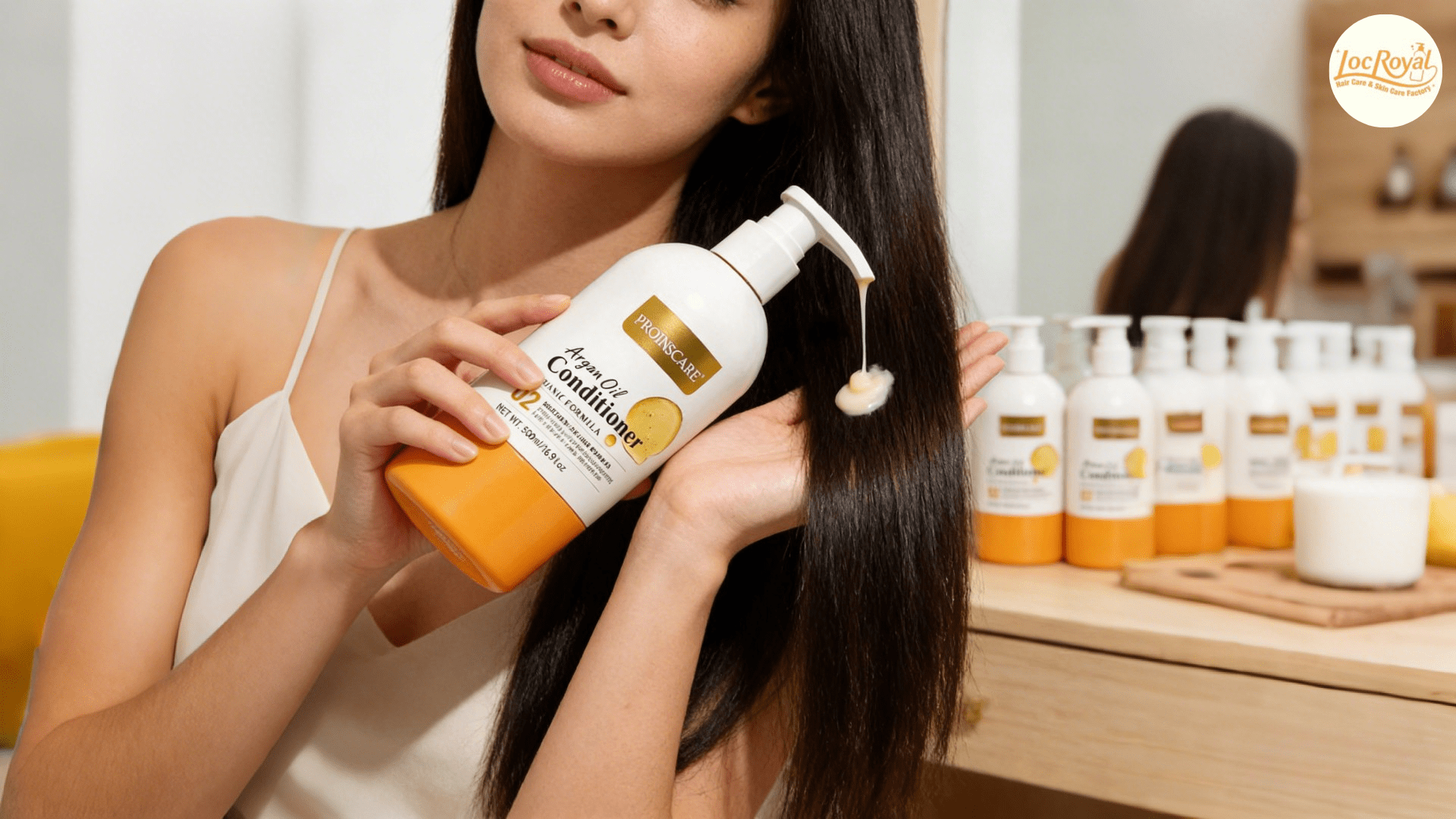
This is the reason why the modern Hair Care Formula Customization must be constructed upon the target region and the target audience. Other brands desire sulfate-free cleansing formulas to be used mildly every day. Some desire alcohol-free or vegan products to keep up with clean beauty statements. Some require thick repair masks for their dry hair, and those who want light serums to tame their frizz.
These real commercial goals should be formulated by a good formulation team.
Testing should also be supported in development by a professional One-Stop Hair Care OEM/ODM Service. That involves stability testing, efficacy testing, and irritation testing. These measures are used to ensure that the formula is stable and will not change over time, will work as intended, and will be usable by ordinary consumers.
Without this testing, a product might seem good in a sample phase but fail in the later stages of storage, shipping, or during use by the customer.
Hair Care Raw Material Specifications also have a second role here. Safety is not the sole protection of good specifications. They also promote uniformity in the texture, smell, PH, and touch of the products. When the manufacturer has control over the ingredients, it is easier to repeat the same formula in several production runs.
To brands, that consistency is important. A poor design can probably be pardoned once, but poor performance is seldom forgiven. This is why formula design and ingredient standards should be collaborative in case a product is supposed to compete in the long run.
Once a formula is approved, the next priority is ensuring it can be produced safely and consistently at scale. Is that formula safe in the factory when the actual production is taking place?
Production Process and Quality Control
Though a formula can be well designed, it will not work unless the factory has good process control. Professional hair care manufacturing is a field where production standards are what convert the success of lab tests to batch-to-batch consistency.
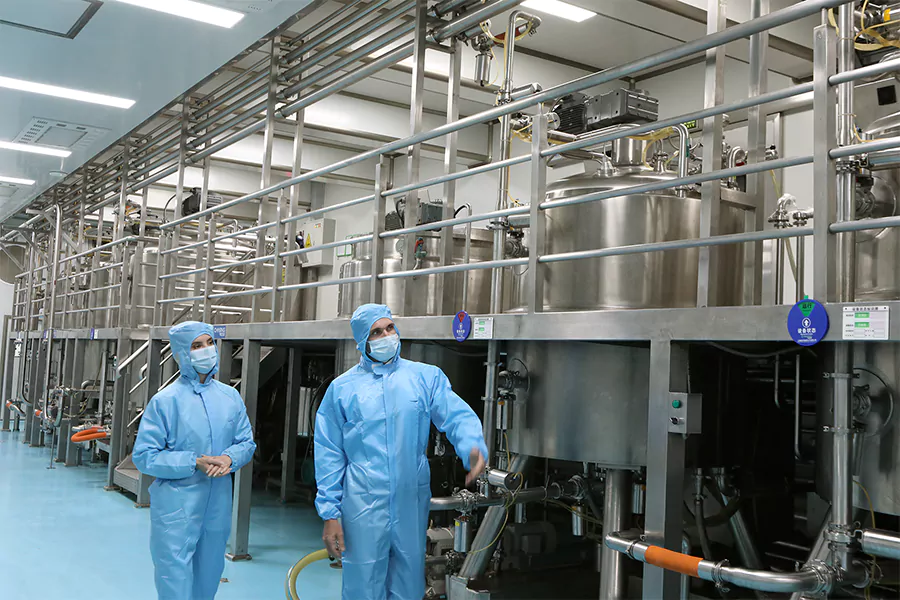
LocRoyal, the company, adheres to GMPC and ISO standards and has fully automated production lines producing hair care. Its factory introduction page also mentions that the company operates smart Siemens equipment, and it strives to enhance the management of quality production and efficiency.
That is important since standardized systems aid in safeguarding formula integrity. A manufacturer that is quality-oriented ought to be able to control the way sanitation, material handling, filling, storage, and documentation are handled in a uniform manner. It is particularly crucial when it comes to items like shampoos, conditioners, masks, hair oils, and serums, where texture, pH, and microbial stability are all influencing the end product.
Another significant standard is Batch traceability. Lots of raw materials should be associated with each production run, and production data must be stored in a systematic manner. In the case of a Private Label Hair Care Manufacturer, traceability is useful in internal audit, quality control, and in customer trust. It is also useful when there is a problem that needs to be verified after production.
Finished goods are to be subjected to final examinations, such as appearance, odor, viscosity, pH, and microbial indicator checks, before shipment. These are fundamental yet essential protection measures. They assist in ensuring that the product that comes out of the factory is of the agreed quality and aids in brand reliability.
And when ingredient standards, testing, and production controls are all necessary, what sort of partner can make them all come under the same roof?

Introduction to LocRoyal Hair Care
To position itself as a niche hair care OEM/ODM supplier with both development and production capabilities, LocRoyal offers itself as a China-based Private Label Hair Care Manufacturer. It provides a full range of OEM/ODM services, including product design and development, production and packaging, with a professional R&D team and design team.
This matters because many brands prefer one reliable manufacturing partner instead of managing separate suppliers for formulation, packaging, and production. They desire a One-Stop Hair Care OEM/ODM Service that can decrease the time lag between communication and accelerate the launch schedules.
Strength
The LocRoyal factory introduction page indicates that the company has a history of more than 15 years in the production of hair care products, has a production base of 50,000 square meters, 23 production lines, over 30 automatic production machines, and a daily production capacity of over 150 tons. They also emphasise a 100,000-level dust-free workshop, and the company has customers in over 100 countries.
It also highlights a complete quality inspection system and a professional R&D team to support product consistency, safety, and development efficiency.
Such information indicates that LocRoyal is attempting to position itself as a scalable hair care production partner as opposed to a small workshop business. In the case of brands, the scale might be critical in the transition of sample approval to volume production. It may also be used to assist in maintaining more stable lead times and flexibility of expanding product lines.
LocRoyal also claims that their manufacturing system is compliant with GMPC and ISO, including FDA, BPOM, and CPNP, in their larger company content. That type of documentation emphasis can simplify cross-border product development for global buyers.
Core OEM/ODM Services
LocRoyal operates in a large variety of hair care products, such as shampoo, conditioner, hair mask, oil, serums, and other tailored hair care products. They claim to assist with individualized and customized products, as well as packaging and development services.
At this point, Hair Care Formula Customization is of great value. A brand might require a daily care shampoo with a light texture, a hair mask that is repair-oriented, or a styling product with a new texture profile. The possibility of changing formula direction, smell, appearance, and packaging during the same process is a tangible benefit.
Producing what already exists is not the only thing that makes a true One-Stop Hair Care OEM/ODM Service. It involves assisting brands in creating products that are in demand. According to LocRoyal, the company provides product design and development to production and packaging, which is what most buyers of the private label seek when they need a lean supply chain.
This is also the reason why the selection of the appropriate Private Label Hair Care Manufacturer can have an impact beyond production. It may affect the pace of development, the efficiency of launching the brand, and its ease of entering new categories.
Cooperation Value
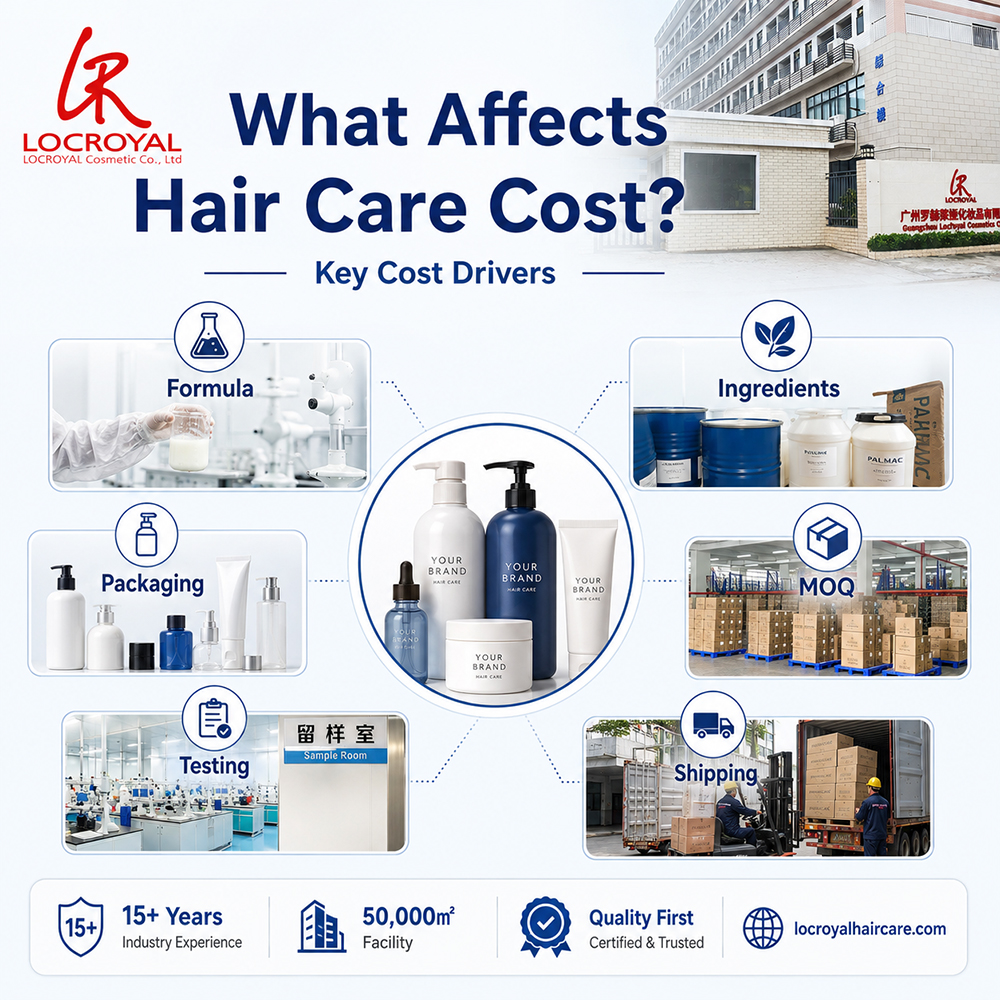
Risk, speed, and repeat purchase potential are the value of cooperation. Compliance problems can be minimized by Strong Hair Care Raw Material Specifications. Consistent formulas can reduce customer complaints and improve repeat purchase potential. Hair care manufacturing systems can enhance consistency and delivery confidence by professionals.
The LocRoyal also highlights the full-process support, such as R&D, production, customer service, and assistance related to packaging. To brands, such support may make the OEM/ODM process easier to handle, particularly when introducing a new line or entering a new market.
Put simply, Hair Care Formula Customization is most applicable in cases where it results in differentiated products that the customers would want to repurchase. A factory can assist in that by providing an appropriate balance of formulation assistance, process control, and commercial flexibility.
Conclusion
The quality of OEM/ODM product development begins way before the finished bottle. It starts with the approval of suppliers, stringent Hair Care Raw Material Specifications, rigorous testing, and disciplined hair care manufacturing procedures. It is these standards that contribute to making a product idea a safe, stable, and market-ready product.
For brands that want to scale with confidence, choosing the right manufacturing partner is about more than outsourcing production. It must imply having access to a trusted system, intelligent Hair Care Formula Customization, and a convenient One-Stop Hair Care OEM/ODM Service that can help meet compliance and commercial objectives.
LocRoyal positions itself as a 15+ years old OEM/ODM manufacturer specializing in hair care with automated production, custom development assistance, and a wide range of services, including product design and packaging.
That combination is important to brands that are entering the current competitive market. The appropriate partner does not simply produce products. The right partner assists in developing hair care lines that are consistent, credible, and promote long-term growth.
Foshan BonnieCo Biotechnology Co., Ltd. (BonnieCo Group) — Self-Owned Factory · Own Brands · Global Certifications · 15 Years of Smart Beauty Manufacturing, We operate three core business divisions:
1.Guangzhou LocRoyal Cosmetics Co., Ltd.: Hair care OEM + self-owned brands including PROINSCARE, PURC
2.Guangzhou BonnieCo Cosmetics Co., Ltd.: Skin care & color cosmetics OEM + self-owned brands including SenseInsCare, Jellyprim
3.A 50,000㎡ self-owned production base in Foshan